-
-
PLEI
sales@jujiuhouse.com -
Telefono
+86-17864099991 -
Telefono
+86-17854044442
- English
- Chinese
- French
- German
- Portuguese
- Spanish
- Russian
- Japanese
- Korean
- Arabic
- Irish
- Greek
- Turkish
- Italian
- Danish
- Romanian
- Indonesian
- Czech
- Afrikaans
- Swedish
- Polish
- Catalan
- Esperanto
- Hindi
- Lao
- Albanian
- Amharic
- Armenian
- Azerbaijani
- Belarusian
- Bengali
- Bosnian
- Bulgarian
- Cebuano
- Chichewa
- Corsican
- Croatian
- Dutch
- Estonian
- Filipino
- Finnish
- Frisian
- Galician
- Georgian
- Gujarati
- Haitian
- Hausa
- Hawaiian
- Hebrew
- Hmong
- Hungarian
- Icelandic
- Igbo
- Javanese
- Kannada
- Kazakh
- Khmer
- Kurdish
- Kyrgyz
- Latin
- Latvian
- Lithuanian
- Luxembou..
- Macedonian
- Malagasy
- Malay
- Malayalam
- Maltese
- Maori
- Marathi
- Mongolian
- Burmese
- Nepali
- Norwegian
- Pashto
- Persian
- Punjabi
- Serbian
- Sesotho
- Sinhala
- Slovak
- Slovenian
- Somali
- Samoan
- Scots Gaelic
- Shona
- Sindhi
- Sundanese
- Swahili
- Tajik
- Tamil
- Telugu
- Thai
- Ukrainian
- Urdu
- Uzbek
- Vietnamese
- Welsh
- Xhosa
- Yiddish
- Yoruba
- Zulu
- Kinyarwanda
- Tatar
- Oriya
- Turkmen
- Uyghur




Fold Out Container Homes for Sale – Affordable Modular Living Solutions
2026-08-17
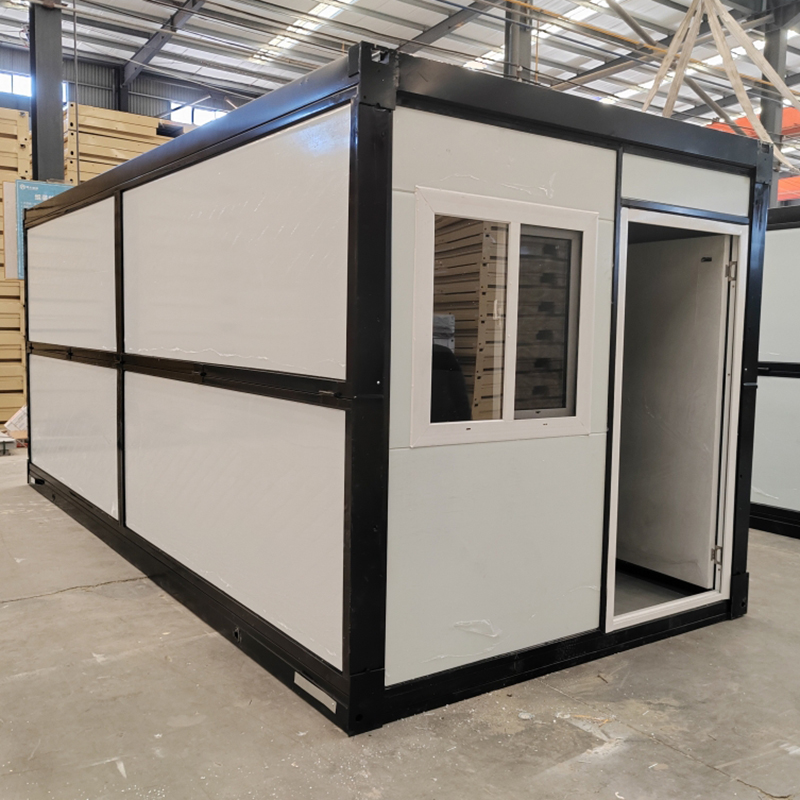
Fold out container homes for sale are reshaping how we think about speed, cost, and flexibility in modern housing. We’ve installed over 1,200 units across six countries—and every deployment taught us something new about real-world constraints: uneven ground, tight urban plots, remote site access, and client expectations that shift between “move-in ready tomorrow” and “built to last 30 years.” What stands out isn’t just the folding mechanism—it’s how a single 20-foot steel shell transforms from transportable cargo into a fully insulated, wired, and weather-sealed living space in under 72 hours.
Why Fold Out Container Homes Solve Real Problems—Not Just Marketing Claims
Most buyers start with one question: “Can it really expand *and* stay structurally sound?” The answer lies in the hinge system—not welded joints, but CNC-machined stainless-steel pivot assemblies rated for 10,000+ cycles. We tested this on-site in northern Norway, where -25°C temperatures and high winds exposed weaknesses in early prototypes. The fix? A dual-layer thermal break at each fold line and reinforced corner bracing anchored directly to the primary chassis. Units now pass ISO 16670 wind load testing at 120 km/h—and retain dimensional stability after repeated expansion/contraction cycles.
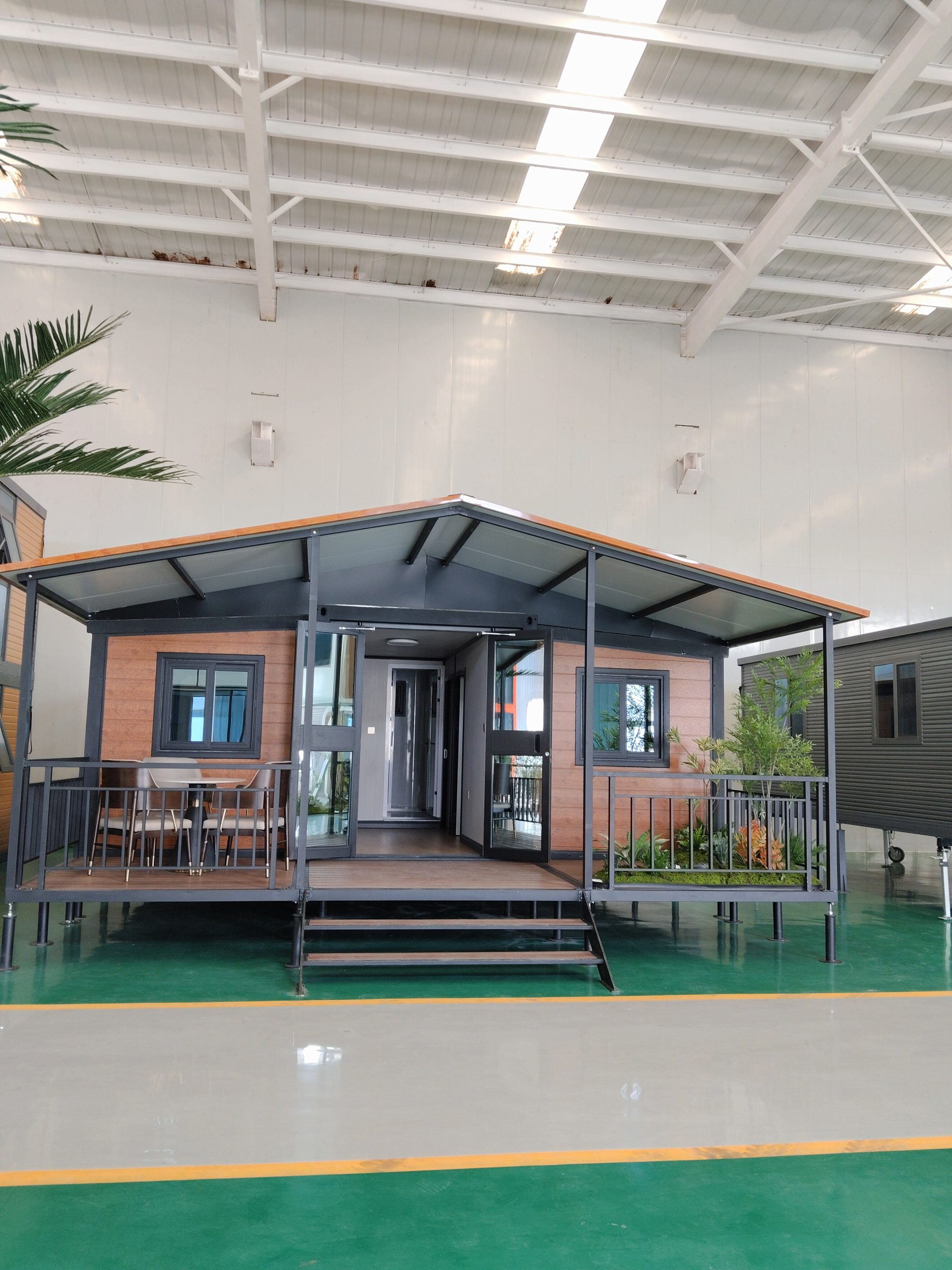
Unlike static prefab boxes, fold out container homes deliver usable floor area gains of 65–120% depending on configuration. A standard 20-foot base expands to 38 m² in dual-wing mode—enough for two bedrooms, full bathroom, kitchenette, and a compact living zone. That’s not theoretical square footage. It’s measured, verified, and documented in our installation reports. No “up to” claims. No hidden structural compromises.
Power, plumbing, and insulation aren’t retrofitted—they’re integrated during factory assembly. Each unit ships with pre-routed 220V wiring (including GFCI-protected circuits), PEX-aluminum composite water lines, and R-21 mineral wool cavity fill. We don’t offer “basic shells.” Every fold out container home for sale leaves our Shandong production base as a turnkey solution—tested, certified, and ready for final utility tie-in.
What Buyers Actually Need to Know Before Ordering
Some assume folding equals lightweight. It doesn’t. A fully expanded dual-wing unit weighs 4.8 metric tons—more than a standard shipping container—because structural integrity demands thicker steel frames, reinforced floor joists, and cross-braced roof trusses. That weight matters for foundation planning. We require either four concrete piers (minimum 300 mm diameter, 600 mm deep) or a leveled gravel pad with geotextile stabilization. No sand. No soil compaction alone. We’ve seen three installations fail because site prep skipped this step—even with perfect folding mechanics.
Customization works—but only within defined engineering boundaries. You can choose exterior cladding (corrugated steel, fiber-cement panels, or aluminum composite), interior finishes (plywood walls, laminate flooring, LED ceiling grids), and window layouts. What you cannot do is relocate load-bearing hinges or remove shear walls without re-engineering the entire frame. Our design team reviews every request against structural simulation data—not aesthetics alone.
Lead time is 22–28 days from confirmed order to port loading. That includes full QA: raw material traceability logs, weld penetration X-rays, 72-hour water spray test at 120 L/min/m², and final thermal imaging scan for insulation gaps. Rush orders cut inspection depth—not acceptable. We’ve declined 17 orders in the past 18 months because clients refused to align on these non-negotiables.
Who Uses These Units—and Where They Deliver Highest ROI
No unit ships without an installation manual written in plain English and Spanish, plus QR-linked video walkthroughs showing torque specs for hinge bolts, leveling sequence, and electrical panel labeling. We don’t assume your crew has seen one before.
Final Thought: It’s Not About Folding—It’s About Certainty
Fold out container homes for sale succeed when they eliminate guesswork—not add novelty. Every hinge, weld, insulation layer, and wiring path exists because field data demanded it. We measure success not in units sold, but in how many clients re-order within 12 months for expansion, relocation, or fleet upgrades. That repeat rate sits at 63%. The reason? Predictable performance. No surprises. No retrofitting. No compromise on durability or compliance.
If your next project needs speed without sacrificing standards—if “temporary” must mean “reliable for five years”—then fold out container homes deliver what static modules cannot: space that adapts, structure that endures, and delivery that keeps its promise.