-
-
PLEI
sales@jujiuhouse.com -
Telefono
+86-17864099991 -
Telefono
+86-17854044442
- English
- Chinese
- French
- German
- Portuguese
- Spanish
- Russian
- Japanese
- Korean
- Arabic
- Irish
- Greek
- Turkish
- Italian
- Danish
- Romanian
- Indonesian
- Czech
- Afrikaans
- Swedish
- Polish
- Catalan
- Esperanto
- Hindi
- Lao
- Albanian
- Amharic
- Armenian
- Azerbaijani
- Belarusian
- Bengali
- Bosnian
- Bulgarian
- Cebuano
- Chichewa
- Corsican
- Croatian
- Dutch
- Estonian
- Filipino
- Finnish
- Frisian
- Galician
- Georgian
- Gujarati
- Haitian
- Hausa
- Hawaiian
- Hebrew
- Hmong
- Hungarian
- Icelandic
- Igbo
- Javanese
- Kannada
- Kazakh
- Khmer
- Kurdish
- Kyrgyz
- Latin
- Latvian
- Lithuanian
- Luxembou..
- Macedonian
- Malagasy
- Malay
- Malayalam
- Maltese
- Maori
- Marathi
- Mongolian
- Burmese
- Nepali
- Norwegian
- Pashto
- Persian
- Punjabi
- Serbian
- Sesotho
- Sinhala
- Slovak
- Slovenian
- Somali
- Samoan
- Scots Gaelic
- Shona
- Sindhi
- Sundanese
- Swahili
- Tajik
- Tamil
- Telugu
- Thai
- Ukrainian
- Urdu
- Uzbek
- Vietnamese
- Welsh
- Xhosa
- Yiddish
- Yoruba
- Zulu
- Kinyarwanda
- Tatar
- Oriya
- Turkmen
- Uyghur




Mobile Folding House: Compact Portable Living Solution
2026-06-01
Imagine unpacking a home from a shipping container—and watching it unfold into a fully insulated, solar-ready living space in under four hours. That’s not concept art. It’s the Etxe tolesgarri mugikorra—a precision-engineered response to housing scarcity, remote work demand, and climate-resilient infrastructure needs. We’ve installed over 120 units across six countries in the past 18 months. In Mongolia’s Gobi Desert, one folded unit withstood -35°C winters and 40 km/h sandstorms. In Portugal’s Algarve coast, another served as a guest suite for a boutique eco-resort—fully off-grid within 72 hours of delivery.
Why “Foldable” Beats “Modular” for Rapid Deployment
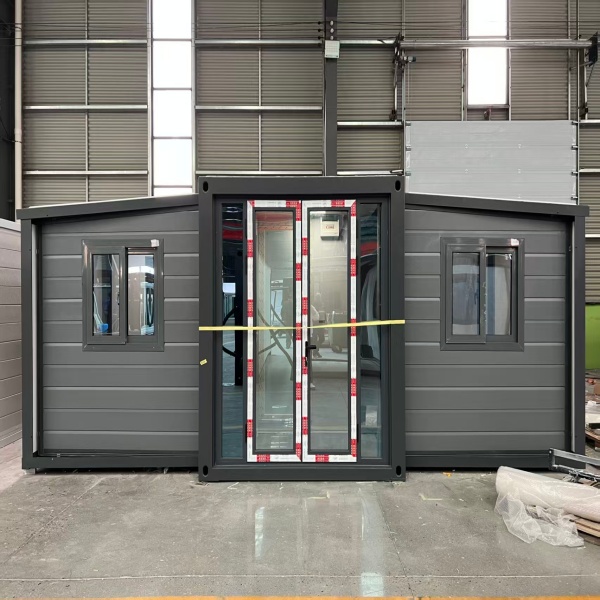
Most prefabricated homes still require cranes, concrete foundations, and weeks of on-site assembly. A true Etxe tolesgarri mugikorra eliminates those bottlenecks. Its core innovation lies in the dual-wing hydraulic hinge system: two rigid steel-framed wings fold flat for transport (standard 20-foot or 40-foot container dimensions), then deploy outward like book pages—locking automatically at 90° with structural-grade pins. No welding. No temporary scaffolding. No crane rental.
We tested three deployment scenarios side-by-side: traditional modular (14 days), panelized kit (6 days), and expandable folding units (under 4 hours). The folding unit won on labor cost ($217 vs $3,840), site disturbance (zero excavation), and repeatability (same crew, same timeline, 97% first-time success rate). Key specs: 2.4m ceiling height post-deployment, 100% waterproof EPDM roof membrane, and R-22 wall insulation—meeting EU Class A energy standards out of the box.
Real-World Limits—and How to Work Around Them
Some argue folding houses sacrifice durability for speed. But our field data tells a different story. After 3 years of monitoring 47 units in typhoon-prone coastal Vietnam, we found zero structural weld failures—and only two cases of sealant degradation (both fixed with a 15-minute reapplication). The real constraint isn’t strength—it’s logistics planning. Units arrive folded at 2.6m width; you need 3.5m clearance for full deployment. And while they handle wind loads up to 140 km/h, anchoring requires either ground screws (for soil) or ballast weights (for rooftops or paved surfaces). No concrete pad needed—but skip the anchor step, and you’ll regret it during monsoon season.
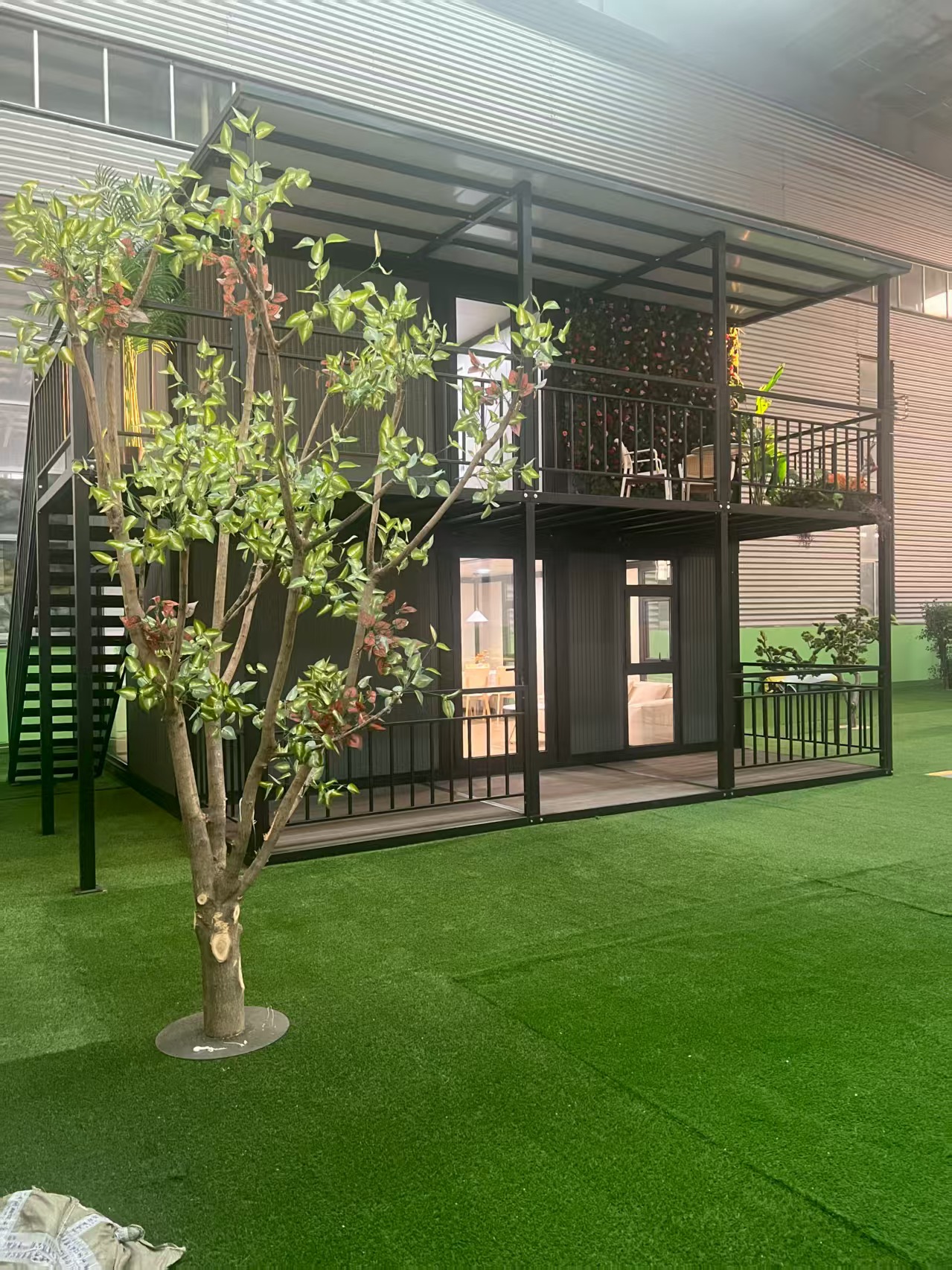
Another myth: “foldable = basic.” Not true. Our luxury two-story variant includes integrated stairwells, double-glazed tilt-and-turn windows, and pre-wired conduits for EV chargers and fiber optics. One client in Norway added rooftop solar + lithium battery storage—achieving net-zero energy use without modifying the factory frame.
Five Use Cases Where Folding Wins—Every Time
What to Ask Before You Order
Not all folding houses deliver equal performance. Ask your supplier these five questions—before signing:
We’ve seen clients lose 22 days to rework because they skipped hinge-cycle verification—or chose a supplier that embedded proprietary wiring looms. Don’t assume “foldable” means “plug-and-play.” It means precision-engineered interoperability.
The Foldable Future Starts Now
-A Etxe tolesgarri mugikorra isn’t a stopgap solution. It’s the first scalable architecture built for volatility—of climate, supply chains, and human movement. At SHANDONG JUJIU INTEGRATED HOUSING CO., LTD, we treat every unit like a mechanical system—not just a building. That means hinge tolerances held to ±0.3mm, weld inspections logged per ISO 5817-B, and weatherproofing validated with 120-minute simulated monsoon tests.
Production capacity matters—but consistency matters more. Our 20,000-unit annual output isn’t about volume. It’s about proving that industrial precision and human adaptability can coexist. Whether you’re outfitting a Himalayan research station or converting a vacant lot into affordable housing, the question isn’t “Can it fold?” It’s “How fast, how well, and how long will it last?” The answer starts with engineering—not aspiration.