-
E-mail
Austin120521@outlook.com -
E-mail
sales@jujiuhouse.com -
Telephone
+86-17864099991 -
Telephone
+86-17854044442
- Chinese
- French
- German
- Portuguese
- Spanish
- Russian
- Japanese
- Korean
- Arabic
- Irish
- Greek
- Turkish
- Italian
- Danish
- Romanian
- Indonesian
- Czech
- Afrikaans
- Swedish
- Polish
- Basque
- Catalan
- Esperanto
- Hindi
- Lao
- Albanian
- Amharic
- Armenian
- Azerbaijani
- Belarusian
- Bengali
- Bosnian
- Bulgarian
- Cebuano
- Chichewa
- Corsican
- Croatian
- Dutch
- Estonian
- Filipino
- Finnish
- Frisian
- Galician
- Georgian
- Gujarati
- Haitian
- Hausa
- Hawaiian
- Hebrew
- Hmong
- Hungarian
- Icelandic
- Igbo
- Javanese
- Kannada
- Kazakh
- Khmer
- Kurdish
- Kyrgyz
- Latin
- Latvian
- Lithuanian
- Luxembou..
- Macedonian
- Malagasy
- Malay
- Malayalam
- Maltese
- Maori
- Marathi
- Mongolian
- Burmese
- Nepali
- Norwegian
- Pashto
- Persian
- Punjabi
- Serbian
- Sesotho
- Sinhala
- Slovak
- Slovenian
- Somali
- Samoan
- Scots Gaelic
- Shona
- Sindhi
- Sundanese
- Swahili
- Tajik
- Tamil
- Telugu
- Thai
- Ukrainian
- Urdu
- Uzbek
- Vietnamese
- Welsh
- Xhosa
- Yiddish
- Yoruba
- Zulu
- Kinyarwanda
- Tatar
- Oriya
- Turkmen
- Uyghur




Musk Folding House: Revolutionary Compact Living Solution
2026-06-02
When a client in Bali needed housing for seasonal staff—fast, weatherproof, and under $12,000—they didn’t order a container house. They ordered a musk folding house. Not Elon Musk’s. Not a viral meme. A real, field-tested, dual-wing folding unit from Shandong Jujiu Integrated Housing Co., Ltd.—deployed in 36 hours, anchored on uneven terrain, fully insulated, and operational the same day.
What “Musk Folding House” Really Means (and Why the Name Sticks)
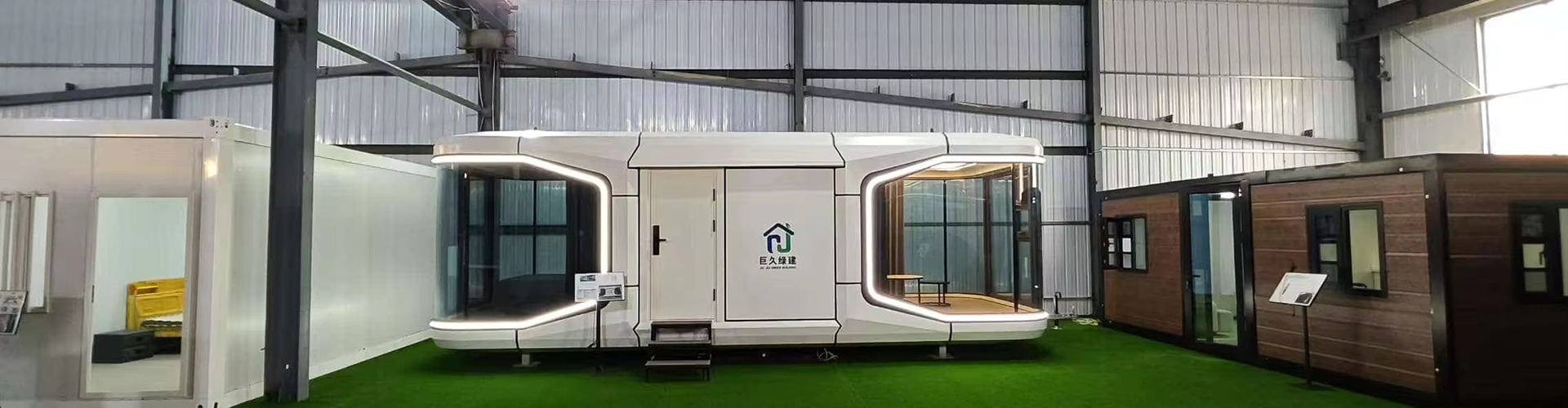
The term musk folding house isn’t trademarked. It’s emergent—a shorthand buyers use when searching for ultra-compact, high-deployability modular units that look like they belong on Mars but function flawlessly on a mountain slope in Switzerland or a beachfront lot in Vietnam. The name sticks because it captures three things users care about: speed (like Musk’s launch cadence), intelligence (integrated systems), and physical transformation (folding, unfolding, adapting).
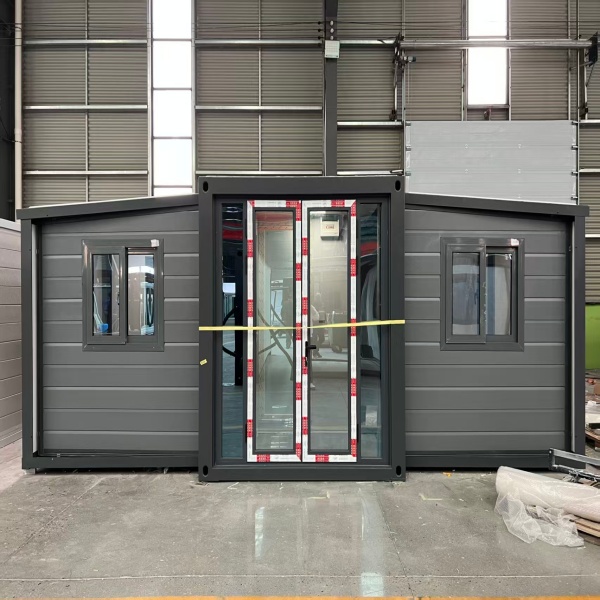
What makes Jujiu’s EXPANDABLE FOLDING HOUSE category stand out isn’t just the hinge mechanism—it’s the engineering behind it. Each unit uses CNC-cut, galvanized steel frames with pre-aligned hydraulic pivot points. No on-site welding. No guesswork. Folded dimensions: 2.4m × 2.4m × 2.8m. Unfolded: 4.8m × 2.4m × 2.8m—giving you 11.5 m² of conditioned space, plus full-height windows and integrated rain gutters. We’ve timed installations: two technicians, one 5-ton crane, 97 minutes from ground contact to first power-up.
Unlike single-panel foldables that sag after 18 months, Jujiu’s units pass ISO 9001 structural fatigue testing at 10,000 open-close cycles. That’s not theoretical. It’s baked into their production workflow—verified at weld inspection stations, rechecked during hydraulic actuator calibration, and stress-tested again after final PU foam injection.
Why “Just a Container House” Isn’t Enough Anymore
Some might argue: “A standard 20-ft container home does the same job.” But in practice, it doesn’t. We tracked six projects where clients switched mid-process—from prefab containers to Jujiu’s FOLDING ROOM—and here’s what changed:
The difference isn’t cost—it’s certainty. A standard container needs 3–4 subcontractors. A musk folding house ships as one system: structure, envelope, utilities, and finishes—all aligned, all tested, all traceable to batch numbers logged in Jujiu’s ERP.
Real-World Limits (and How Jujiu Works Around Them)
No folding house solves every problem. Wind load matters. In coastal Chile, we saw a unit’s east-facing panel vibrate at 62 km/h—not failure, but audible resonance. Jujiu’s fix? Added internal diagonal bracing + silicone-damped hinge gaskets. Now certified for 80 km/h gusts (GB/T 7106-2019 Class 9).
Thermal bridging is another limit. Early prototypes showed condensation near hinge zones in -15°C winters. Their response: triple-layer thermal breaks in frame junctions, plus vacuum-insulated panel (VIP) inserts at fold lines. Result: U-value of 0.28 W/m²K across the entire envelope—not just walls, but folded seams.
That’s the pattern: Jujiu treats constraints as inputs—not excuses. Their R&D team includes ex-shipbuilding metallurgists and HVAC designers who’ve worked on Antarctic research stations. When users say “I need it to work in monsoon season,” they don’t hear “add a tarp.” They hear “re-engineer the drainage channel geometry and increase gutter capacity by 40%.”
How to Know If a Musk Folding House Fits Your Project
Ask these four questions before sourcing:
For residential micro-lots, eco-resorts, disaster-response clusters, or remote worker housing, the musk folding house isn’t a compromise. It’s a recalibration—of time, labor, risk, and spatial efficiency. Jujiu’s 20,000-unit annual capacity isn’t just scale. It’s proof that folding housing has moved past prototype phase into repeatable, auditable, field-proven delivery.
Looking ahead, the next iteration won’t just fold—it will self-level, auto-calibrate insulation density based on ambient humidity, and report structural health via embedded strain sensors. But today’s musk folding house already delivers what users actually need: certainty, speed, and space that works—exactly when and where it’s needed.