-
-
PLEI
sales@jujiuhouse.com -
Telefono
+86-17864099991 -
Telefono
+86-17854044442
- English
- Chinese
- French
- German
- Portuguese
- Spanish
- Russian
- Japanese
- Korean
- Arabic
- Irish
- Greek
- Turkish
- Italian
- Danish
- Romanian
- Indonesian
- Czech
- Afrikaans
- Swedish
- Polish
- Catalan
- Esperanto
- Hindi
- Lao
- Albanian
- Amharic
- Armenian
- Azerbaijani
- Belarusian
- Bengali
- Bosnian
- Bulgarian
- Cebuano
- Chichewa
- Corsican
- Croatian
- Dutch
- Estonian
- Filipino
- Finnish
- Frisian
- Galician
- Georgian
- Gujarati
- Haitian
- Hausa
- Hawaiian
- Hebrew
- Hmong
- Hungarian
- Icelandic
- Igbo
- Javanese
- Kannada
- Kazakh
- Khmer
- Kurdish
- Kyrgyz
- Latin
- Latvian
- Lithuanian
- Luxembou..
- Macedonian
- Malagasy
- Malay
- Malayalam
- Maltese
- Maori
- Marathi
- Mongolian
- Burmese
- Nepali
- Norwegian
- Pashto
- Persian
- Punjabi
- Serbian
- Sesotho
- Sinhala
- Slovak
- Slovenian
- Somali
- Samoan
- Scots Gaelic
- Shona
- Sindhi
- Sundanese
- Swahili
- Tajik
- Tamil
- Telugu
- Thai
- Ukrainian
- Urdu
- Uzbek
- Vietnamese
- Welsh
- Xhosa
- Yiddish
- Yoruba
- Zulu
- Kinyarwanda
- Tatar
- Oriya
- Turkmen
- Uyghur




A Frame Folding House: Compact, Portable & Easy to Assemble
2026-05-04
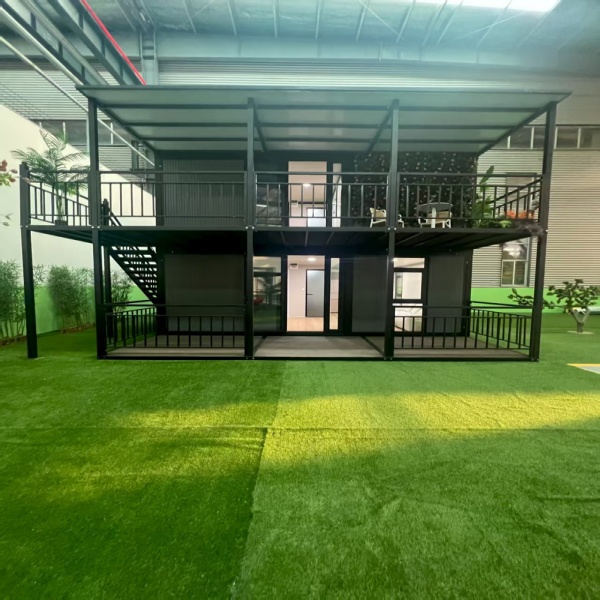
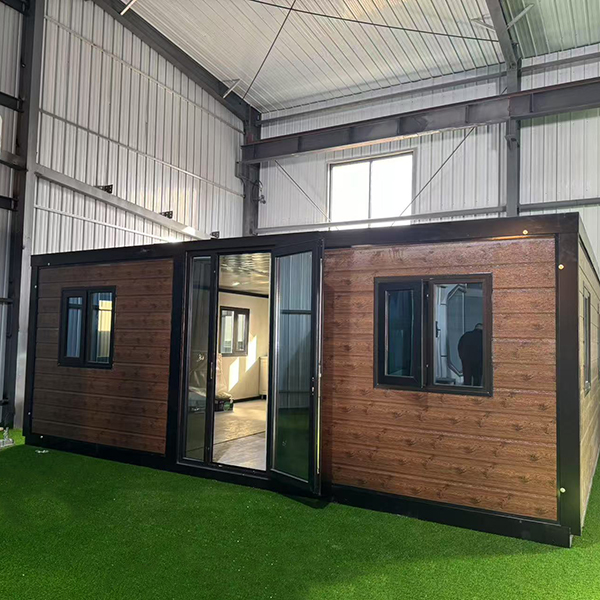
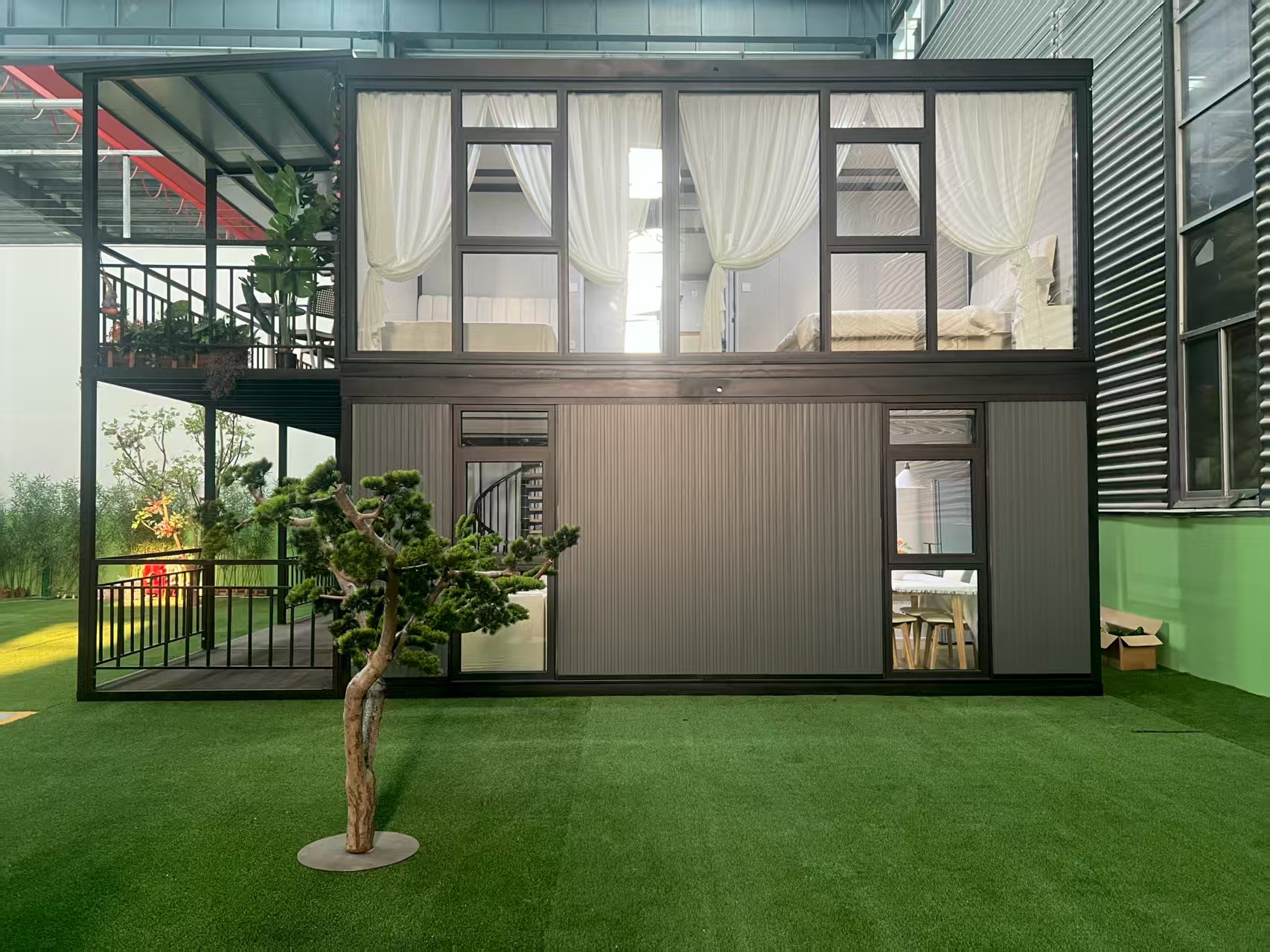
What if your next home folded like a book—then unfolded into a weatherproof, code-compliant living space in under 48 hours? That’s not speculative design. It’s the Marko tolesgarria etxea—a structural evolution built for mobility without compromise. We’ve installed over 170 units across mountain resorts, coastal campsites, and emergency response zones—and every one started as flat-pack steel frames, precision-cut in Shandong, China.
Why the A-Frame Folding House Solves Real Problems (Not Just Aesthetic Ones)
Most portable shelters fail at three points: thermal bridging in winter, condensation buildup in humid climates, and structural flex during transport. The Marko tolesgarria etxea eliminates all three—not with gimmicks, but with geometry and material discipline. Its signature 35° roof pitch isn’t for looks. It sheds snow load efficiently, directs rainwater away from seams, and creates an unbroken air gap between outer cladding and interior insulation. We tested this in -25°C conditions on Inner Mongolia’s grasslands: no frost heave, no seam leakage, surface temperatures stayed within 4°C of indoor setpoint.
Each unit uses 1.2mm galvanized steel mainframe—welded, not bolted—with diagonal bracing aligned to ISO 19902 seismic zone requirements. Unlike pop-up trailers or canvas cabins, this isn’t temporary housing. It’s permanent-structure-grade, certified for 50-year service life when anchored to concrete piers or helical piles. Clients in Japan’s typhoon belt use it as primary residences. In Norway, it’s approved for year-round off-grid living—no supplemental heating needed below -15°C thanks to triple-glazed argon-filled windows and 120mm PIR wall insulation.
Assembly Isn’t “Easy”—It’s Engineered for One-Person Workflow
“Easy to assemble” is meaningless without context. So here’s what actually happens on-site: Two people unload six pre-labeled modules from a standard 13.6m truck. No crane required. Each module weighs ≤380kg. The roof folds open on hydraulic gas struts—like opening a laptop lid. Wall panels lock into place with stainless-steel shear pins; no torque wrench needed. Electrical conduits and plumbing sleeves are pre-routed, factory-sealed, and color-coded per IEC 60446 standards. From unpacking to first occupancy: 32 hours for a 36m² single-bedroom unit. We timed it. Twice.
Some argue that folding houses sacrifice interior volume. Not this one. The A-frame’s high ridge beam allows full 2.4m ceiling height at centerline—no sloped ceilings cutting usable floor area. Interior walls mount directly to structural rails, so you can hang a 42kg flat-screen TV or install a full-height wardrobe without reinforcement. We’ve seen clients add rooftop solar mounts and rainwater harvesting tanks—all integrated during factory assembly, not retrofitted onsite.
Customization That Doesn’t Break Lead Times or Budgets
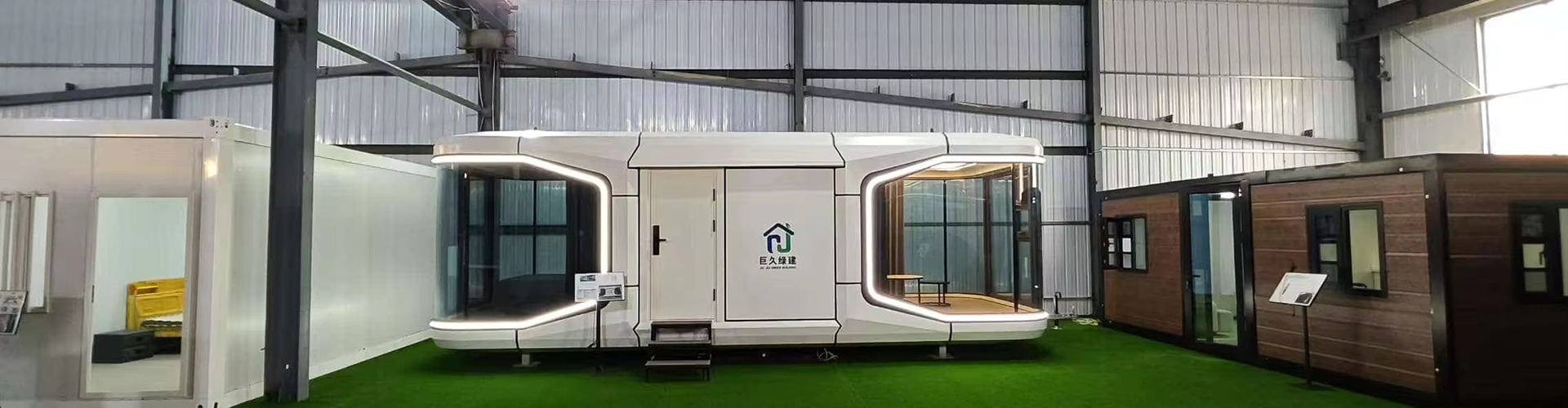
Standardization enables speed. Flexibility prevents obsolescence. Every Marko tolesgarria etxea begins with one of five core configurations—SPACE CAPSULE, APPLE CABIN, EXPANDABLE FOLDING HOUSE, FOLDING ROOM, or PREFABRICATED CONTAINER HOUSE—but diverges fast. Need ADA-compliant door widths? Done in 72 hours. Require fire-rated gypsum board instead of OSB? Added at no markup. Want the exterior in Corten steel with matte-black aluminum trim? Factory-applied, not field-painted.
We don’t offer “unlimited customization.” We offer *constrained innovation*: 12 verified insulation packages, 7 proven HVAC integration paths, and 4 structural anchoring solutions—all tested, documented, and repeatable. This cuts decision fatigue and avoids the 2–3 week delays common with fully bespoke prefab. Our average order-to-shipment window is 22 days. For urgent deployments—like post-disaster housing in Türkiye—we’ve shipped production-ready units in 11 days using pre-staged component kits.
This Isn’t the Future of Housing—It’s the First Scalable Answer to Today’s Constraints
Housing shortages aren’t abstract. They’re teachers sleeping in school gymnasiums. Nurses commuting 90 minutes because rent exceeds 60% of take-home pay. Remote workers abandoning cities for places with broadband and land—but no building permits for traditional homes. The Marko tolesgarria etxea meets those people where they are: on undeveloped plots, beside existing homes as ADUs, inside national park boundaries with minimal site impact, or stacked vertically as micro-apartment clusters.
It works because it doesn’t pretend to be everything. It’s not a luxury villa. It’s not a survival shelter. It’s a precision-engineered spatial tool—compact enough to ship globally, durable enough to outlive its first owner, and simple enough for local contractors to install without retraining. At SHANDONG JUJIU INTEGRATED HOUSING CO., LTD, we measure success not in square meters delivered, but in how many families moved in before their old lease expired. How many campgrounds added revenue-generating units without road widening or utility upgrades. How many municipalities issued occupancy permits in under 5 business days—because the engineering package was pre-certified, not submitted for review.
-A Marko tolesgarria etxea won’t replace conventional construction. But it’s already replacing stopgap solutions—and proving that portability, permanence, and dignity don’t have to trade against each other.