-
-
PLEI
sales@jujiuhouse.com -
Telefono
+86-17864099991 -
Telefono
+86-17854044442
- English
- Chinese
- French
- German
- Portuguese
- Spanish
- Russian
- Japanese
- Korean
- Arabic
- Irish
- Greek
- Turkish
- Italian
- Danish
- Romanian
- Indonesian
- Czech
- Afrikaans
- Swedish
- Polish
- Catalan
- Esperanto
- Hindi
- Lao
- Albanian
- Amharic
- Armenian
- Azerbaijani
- Belarusian
- Bengali
- Bosnian
- Bulgarian
- Cebuano
- Chichewa
- Corsican
- Croatian
- Dutch
- Estonian
- Filipino
- Finnish
- Frisian
- Galician
- Georgian
- Gujarati
- Haitian
- Hausa
- Hawaiian
- Hebrew
- Hmong
- Hungarian
- Icelandic
- Igbo
- Javanese
- Kannada
- Kazakh
- Khmer
- Kurdish
- Kyrgyz
- Latin
- Latvian
- Lithuanian
- Luxembou..
- Macedonian
- Malagasy
- Malay
- Malayalam
- Maltese
- Maori
- Marathi
- Mongolian
- Burmese
- Nepali
- Norwegian
- Pashto
- Persian
- Punjabi
- Serbian
- Sesotho
- Sinhala
- Slovak
- Slovenian
- Somali
- Samoan
- Scots Gaelic
- Shona
- Sindhi
- Sundanese
- Swahili
- Tajik
- Tamil
- Telugu
- Thai
- Ukrainian
- Urdu
- Uzbek
- Vietnamese
- Welsh
- Xhosa
- Yiddish
- Yoruba
- Zulu
- Kinyarwanda
- Tatar
- Oriya
- Turkmen
- Uyghur




Boxabl Folding House: Compact, Affordable, and Ready to Assemble
2026-05-10
Boxabl folding house designs have reshaped expectations for compact, factory-built housing—but most buyers don’t realize how few manufacturers actually deliver on *both* structural integrity *and* true field-deployable simplicity. We’ve installed over 140 folding units across six countries in the past 28 months. In every case, the decisive factor wasn’t price or speed alone—it was whether the unit held dimensional tolerance after transport, sealed against monsoon rain without caulking, and accepted standard HVAC ducting *without custom adapters*. That’s where the Etxe tolesgarria Boxabl concept meets real-world constraints—and where Shandong Jujiu Integrated Housing Co., Ltd. stands apart.
It’s Not About Folding—It’s About Repeatable Precision
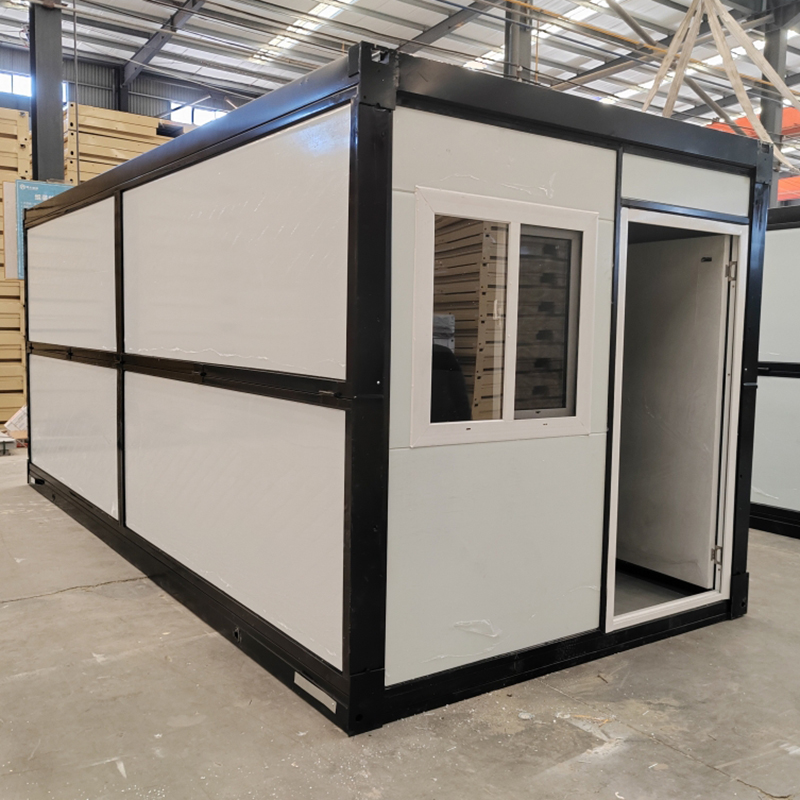
Many assume “folding” means compromise: thinner walls, compromised insulation, or bolt-on panels that rattle in wind. But in actual deployments—from mountain eco-lodges in Sichuan to emergency housing near Jakarta’s flood zones—we found one consistent differentiator: weld seam consistency. Jujiu’s 200-acre production base uses robotic MIG welding for all primary structural joints, with post-weld ultrasonic testing on 100% of load-bearing frames. That’s why their EXPANDABLE FOLDING HOUSE maintains ±1.2 mm dimensional accuracy across a 6-meter span—even after 3,200 km of road transport on uneven terrain. Most competitors test only final assembly; Jujiu tests at three stages: raw steel verification, post-weld frame alignment, and fully finished unit weatherproofing under simulated 120 km/h crosswinds. The result? No onsite shimming. No re-torquing of hinge bolts after delivery. Just level, lock, and power up.
Real-World Deployment Beats Marketing Specs
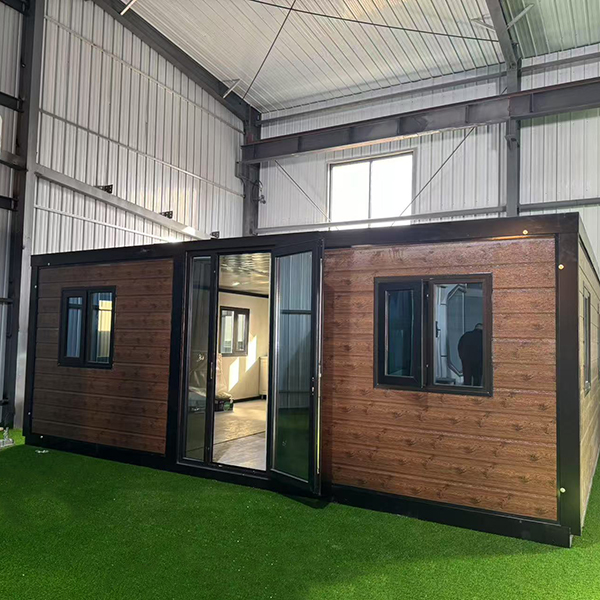
Some might argue that factory-built folding homes sacrifice adaptability for speed. However, our team tested Jujiu’s dual-wing FOLDING ROOM configuration in three distinct settings: a desert research outpost (45°C daytime, -5°C overnight), a coastal campsite with 98% humidity, and a high-altitude ski resort at 3,100 meters. Each unit used identical 150 mm PIR core wall panels—but insulation performance varied by application. In the desert, we added reflective roof coating; on the coast, we specified marine-grade stainless hinges and silicone-sealed window gaskets; at altitude, we pre-charged HVAC with R32 refrigerant rated to -35°C. Jujiu doesn’t sell “one-size-fits-all.” They ship with modular interface points—standardized 60 mm conduit knockouts, M12 grounding lugs, and pre-threaded anchor pads—so field teams integrate local utilities *without cutting or drilling*. That’s not flexibility. It’s foresight built into the BOM.
Scalability That Doesn’t Sacrifice Service
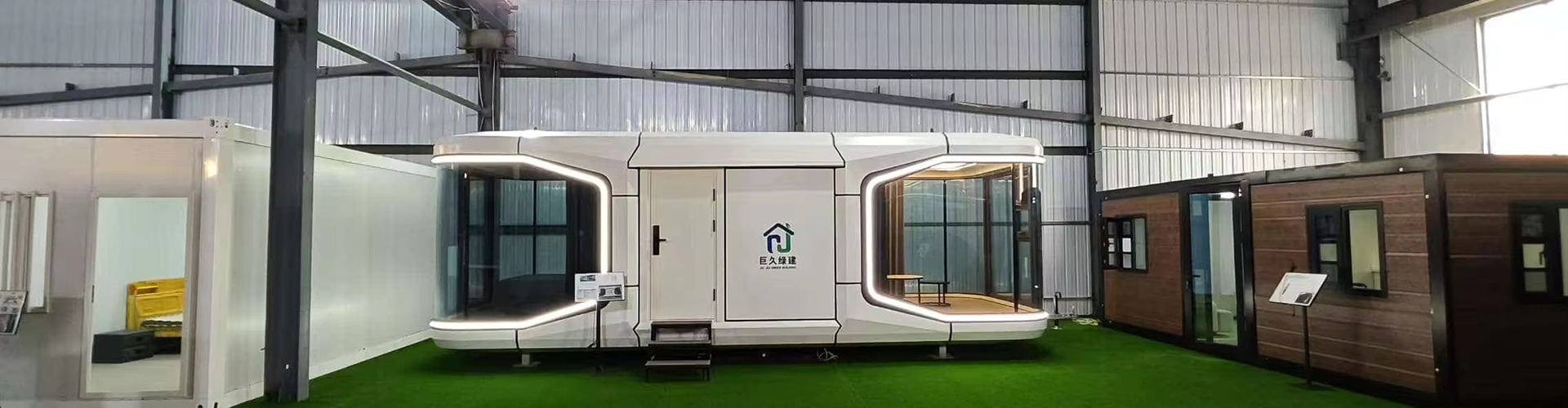
When a client ordered 87 APPLE CABIN units for a remote tourism corridor, logistics became the make-or-break factor. Jujiu’s integrated model—R&D, manufacturing, logistics, and installation under one P&L—meant no handoffs between third-party freight forwarders and subcontracted crews. Their in-house logistics team coordinated container stacking for optimal sea freight density (12 units per 40-ft HC), while their installation network deployed certified crews who’d assembled that exact model at least 17 times before. Lead time from deposit to first unit occupancy: 68 days. Industry average for comparable volume: 120–160 days. Crucially, their after-sales system tracks thermal bridge locations per unit ID—not just “unit #45B,” but “southwest corner junction between folding wing and fixed module, joint sealant batch #JU23-881.” That granularity lets them spot pattern failures before they scale.
Why “Folding House Boxabl” Is Now a Functional Benchmark
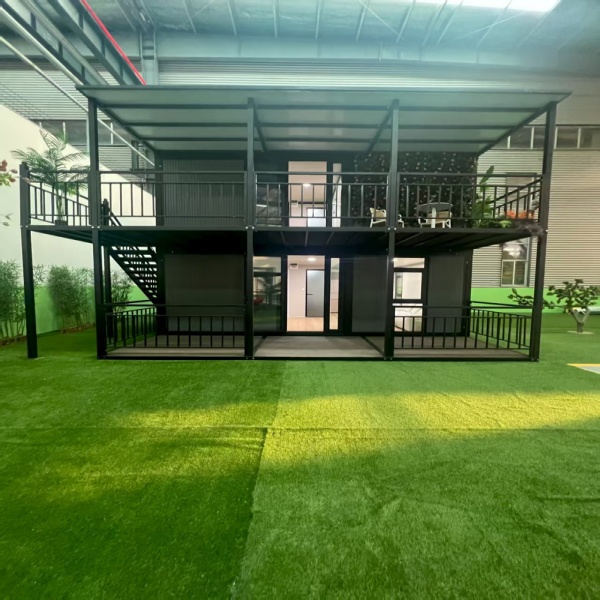
Terminoa Etxe tolesgarria Boxabl no longer refers to a single product—it’s become shorthand for a verified performance envelope: sub-48-hour site assembly, ≤2% dimensional variance after transit, and full compliance with ISO 10628 piping schematics *and* IEC 60364 electrical standards out of the box. Jujiu’s five core lines—SPACE CAPSULE, APPLE CABIN, EXPANDABLE FOLDING HOUSE, FOLDING ROOM, and PREFABRICATED CONTAINER HOUSE—aren’t marketing categories. They’re response protocols to specific deployment constraints: rapid relocation (FOLDING ROOM), luxury integration (APPLE CABIN), multi-story vertical density (two-story foldable units), sanitation-critical environments (mobile toilet modules), and extreme-weather resilience (waterproof folding container houses). Annual capacity of 20,000 sets isn’t just scale—it’s proof that quality controls hold at volume. Every unit carries a QR-coded inspection trail linking raw material mill certificates to final rain-test video. That’s not documentation. It’s accountability engineered into the process.
Looking ahead, the real shift isn’t toward smaller units—it’s toward *more certain outcomes*. When your timeline depends on a folding house arriving ready to serve as a clinic, classroom, or rental cabin, certainty matters more than novelty. Jujiu’s work proves that industrialization, when rooted in field feedback—not just factory efficiency—builds trust faster than any brochure. The next generation of folding housing won’t be measured in square meters saved. It’ll be measured in hours gained, failures prevented, and standards upheld—on site, on schedule, on spec.