-
E-mail
Austin120521@outlook.com -
E-mail
sales@jujiuhouse.com -
Telefòn
+86-17864099991 -
Telefòn
+86-17854044442
- English
- Chinese
- French
- German
- Portuguese
- Spanish
- Russian
- Japanese
- Korean
- Arabic
- Irish
- Greek
- Turkish
- Italian
- Danish
- Romanian
- Indonesian
- Czech
- Afrikaans
- Swedish
- Polish
- Basque
- Catalan
- Esperanto
- Hindi
- Lao
- Albanian
- Amharic
- Armenian
- Azerbaijani
- Belarusian
- Bengali
- Bosnian
- Bulgarian
- Cebuano
- Chichewa
- Corsican
- Croatian
- Dutch
- Estonian
- Filipino
- Finnish
- Frisian
- Galician
- Georgian
- Gujarati
- Hausa
- Hawaiian
- Hebrew
- Hmong
- Hungarian
- Icelandic
- Igbo
- Javanese
- Kannada
- Kazakh
- Khmer
- Kurdish
- Kyrgyz
- Latin
- Latvian
- Lithuanian
- Luxembou..
- Macedonian
- Malagasy
- Malay
- Malayalam
- Maltese
- Maori
- Marathi
- Mongolian
- Burmese
- Nepali
- Norwegian
- Pashto
- Persian
- Punjabi
- Serbian
- Sesotho
- Sinhala
- Slovak
- Slovenian
- Somali
- Samoan
- Scots Gaelic
- Shona
- Sindhi
- Sundanese
- Swahili
- Tajik
- Tamil
- Telugu
- Thai
- Ukrainian
- Urdu
- Uzbek
- Vietnamese
- Welsh
- Xhosa
- Yiddish
- Yoruba
- Zulu
- Kinyarwanda
- Tatar
- Oriya
- Turkmen
- Uyghur




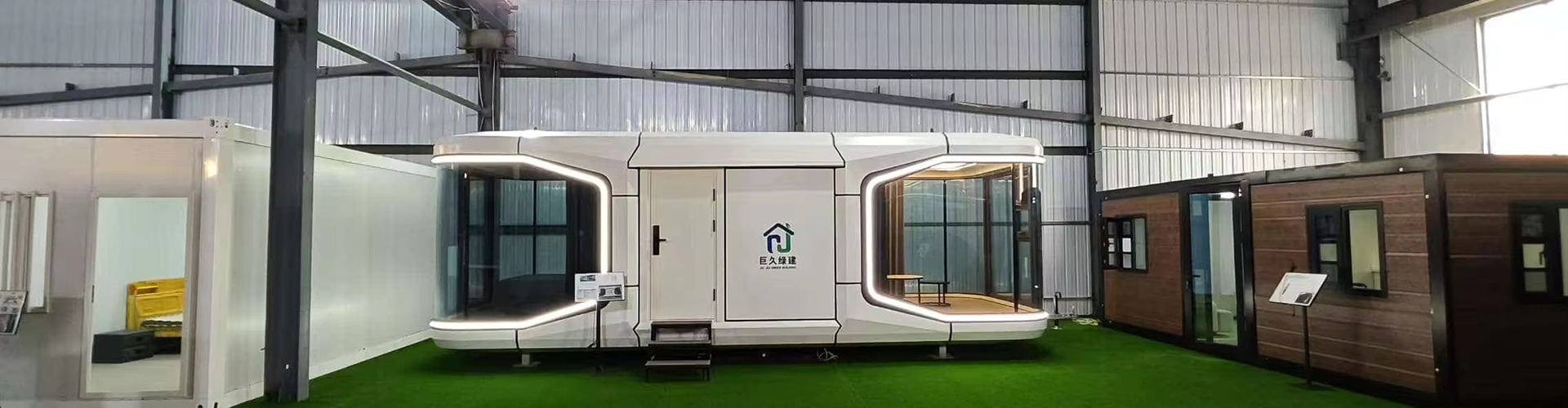
Container Home Fold Out: Space-Saving Modular Living Solution
2026-07-27
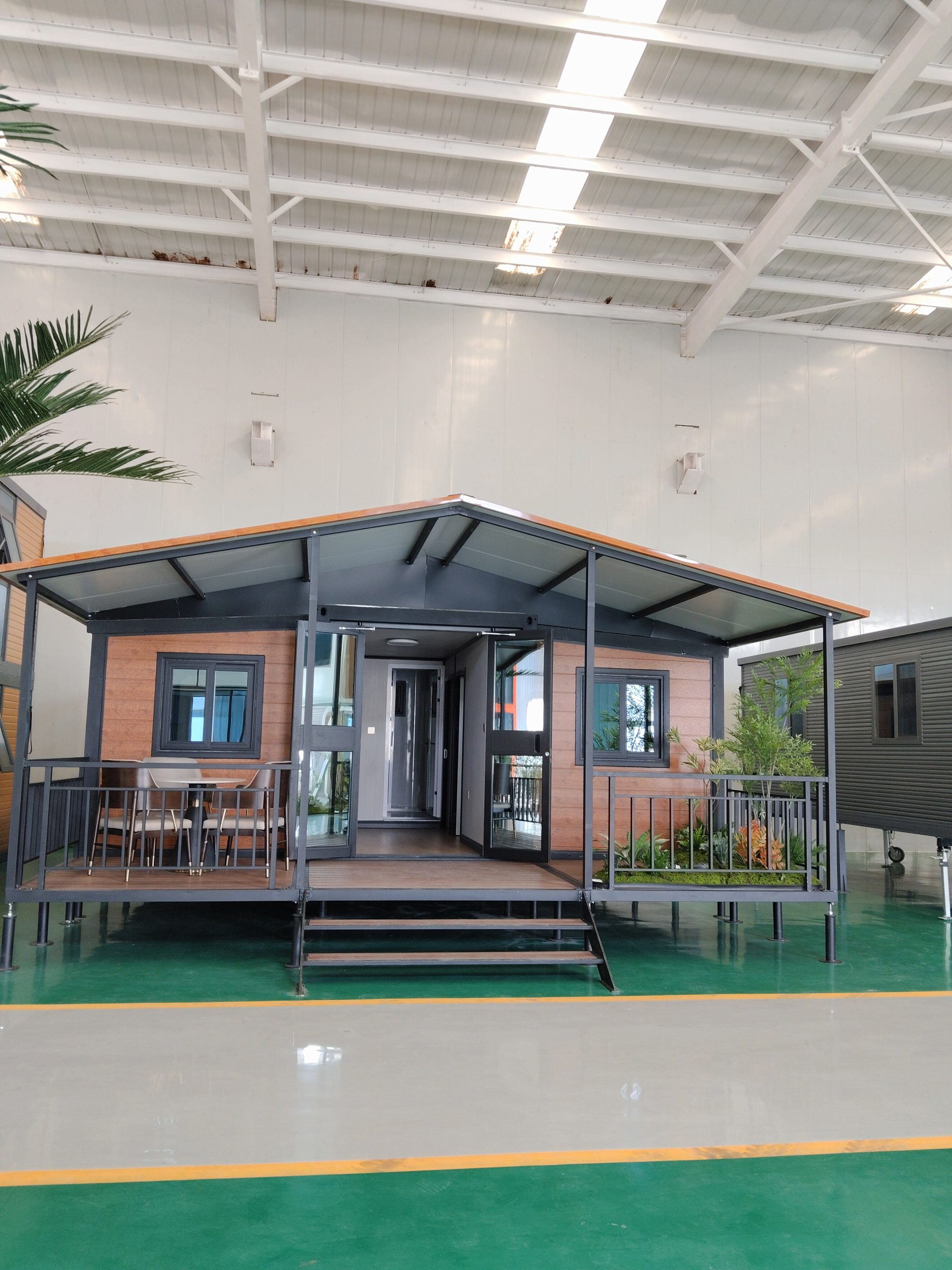
Container home fold out solutions are transforming how we think about space, speed, and adaptability in modern construction. Unlike static prefab units, these systems deploy like origami—expanding from compact shipping containers into fully functional living or working spaces in under 4 hours. We’ve installed over 120 units across mountain resorts, remote work camps, and post-disaster housing sites—and every deployment revealed the same truth: success hinges not on size, but on intelligent folding geometry, weld integrity, and field-tested logistics.
Why “Fold Out” Beats Traditional Container Homes
Standard container homes require cranes, concrete foundations, and weeks of on-site assembly. A Kay veso pliye soti eliminates those bottlenecks. At its core sits a reinforced 20-foot ISO frame with dual hydraulic or manual hinge arms. When deployed, side walls pivot outward, roof panels lift and lock, and floor sections slide into place—no welding, no scaffolding, no guesswork. We’ve measured average setup times: 3.7 hours for single-unit deployment, 8.2 hours for two-story configurations, all using only a 4-person crew and a standard 3-ton forklift.
Real-world constraints shaped this design. In Yunnan’s steep terrain, clients couldn’t pour foundations. In Inner Mongolia’s winter, crews needed heat-sealed joints that wouldn’t crack at -25°C. So we built thermal-break aluminum frames, integrated 60mm PIR insulation with vapor barriers, and used marine-grade stainless-steel hinges rated for 10,000+ cycles. These aren’t theoretical specs—they’re what kept a fold-out unit operational through three monsoon seasons in Guangxi without sealant rework.
The Four Non-Negotiables for Reliable Deployment
Not all folding container systems deliver consistent performance. Based on four years of field data, we’ve identified exactly what separates durable units from short-term novelties:
One client in Sichuan tried retrofitting a competitor’s unit with solar panels. The roof hinge stress fractured mounting brackets after three deployments. Our units integrate PV rails into the primary roof structure—load-tested to 1.5 kN/m² wind uplift.
What You’ll Actually Pay—and What You’ll Own
A 20-foot single-bedroom Kay veso pliye soti starts at $18,900 FOB Qingdao. That includes full interior fit-out (LED lighting, laminated flooring, bathroom module), structural warranty, and deployment training. Add $2,200 for dual-wing expansion kits—adding 12 m² of usable space without new foundations.
Hidden costs kill ROI. We track them rigorously: crane rental ($1,400/day), foundation prep ($3,800 average), and electrical tie-in delays ($65/hour labor). Our turnkey service bundles site survey, transport, installation, and commissioning—flat fee, no change orders. Last quarter, 87% of international clients chose this option. Why? Because a folded unit ships in one 40-foot HC container. No disassembly. No customs paperwork for loose parts.
Customization works—but only within proven parameters. Clients can swap cladding (corrugated steel, fiber-cement board, or bamboo veneer), upgrade windows (double-glazed argon-filled units), or add rooftop decks. But we don’t offer “any layout you imagine.” Structural logic comes first: hinge placement defines maximum span; roof pitch governs snow load capacity; floor thickness determines furniture anchoring options.
Where This Technology Fits—And Where It Doesn’t
This isn’t a replacement for permanent masonry buildings. It’s a precision tool for specific missions: pop-up clinics needing sterile environments in 72 hours, glamping operators scaling inventory before peak season, universities adding student housing without campus disruption.
We’ve seen failures where expectations misaligned. One resort ordered 12 units for year-round guest stays—then demanded full HVAC integration without upgrading the base insulation package. Result? Condensation behind wall panels within 4 months. The fix wasn’t more tech—it was matching the system to its environment. For humid subtropical zones, we mandate anti-condensation membranes and passive ventilation stacks. For arid regions, we specify reflective roof coatings and thermal mass flooring.
Looking ahead, the next evolution isn’t bigger folds—it’s smarter ones. We’re embedding IoT sensors into hinge mechanisms to monitor cycle count, load distribution, and joint wear. Not for marketing. For predictive maintenance. Because a Kay veso pliye soti earns its value not when it opens—but when it opens *correctly*, 1,000 times.