-
E-mail
Austin120521@outlook.com -
E-mail
sales@jujiuhouse.com -
Telefòn
+86-17864099991 -
Telefòn
+86-17854044442
- English
- Chinese
- French
- German
- Portuguese
- Spanish
- Russian
- Japanese
- Korean
- Arabic
- Irish
- Greek
- Turkish
- Italian
- Danish
- Romanian
- Indonesian
- Czech
- Afrikaans
- Swedish
- Polish
- Basque
- Catalan
- Esperanto
- Hindi
- Lao
- Albanian
- Amharic
- Armenian
- Azerbaijani
- Belarusian
- Bengali
- Bosnian
- Bulgarian
- Cebuano
- Chichewa
- Corsican
- Croatian
- Dutch
- Estonian
- Filipino
- Finnish
- Frisian
- Galician
- Georgian
- Gujarati
- Hausa
- Hawaiian
- Hebrew
- Hmong
- Hungarian
- Icelandic
- Igbo
- Javanese
- Kannada
- Kazakh
- Khmer
- Kurdish
- Kyrgyz
- Latin
- Latvian
- Lithuanian
- Luxembou..
- Macedonian
- Malagasy
- Malay
- Malayalam
- Maltese
- Maori
- Marathi
- Mongolian
- Burmese
- Nepali
- Norwegian
- Pashto
- Persian
- Punjabi
- Serbian
- Sesotho
- Sinhala
- Slovak
- Slovenian
- Somali
- Samoan
- Scots Gaelic
- Shona
- Sindhi
- Sundanese
- Swahili
- Tajik
- Tamil
- Telugu
- Thai
- Ukrainian
- Urdu
- Uzbek
- Vietnamese
- Welsh
- Xhosa
- Yiddish
- Yoruba
- Zulu
- Kinyarwanda
- Tatar
- Oriya
- Turkmen
- Uyghur




Folding House Elon Musk: Revolutionary Compact Living Solution
2026-05-18
When people search for “folding house Elon Musk,” they’re not looking for a Tesla product or a SpaceX prototype. They’re searching for something real: compact, fast-deployable housing that feels futuristic but works *today*. And what they often find—after scrolling past clickbait headlines and AI-generated speculation—is a practical, field-tested solution built in Shandong, China: the Expandable Folding House by SHANDONG JUJIU INTEGRATED HOUSING CO., LTD.
No rockets. No hype. Just folding houses that ship, unfold, and lock into place in under 4 hours.
We’ve installed over 1,200 units across 17 countries—and every one started with the same question: “How do you deliver full-function living space without cranes, concrete foundations, or three-month timelines?” The answer wasn’t in a lab. It was in the weld seams, hydraulic hinge tolerances, and weatherproofing tests our engineers ran on the 200-acre production base near Qingdao.
Our Expandable Folding House isn’t inspired by Elon Musk’s vision—it’s built for the same users he talks about: remote workers needing off-grid cabins, resort developers scaling seasonal capacity, disaster-response teams requiring shelter in 72 hours, and landowners seeking legal, code-compliant ADUs without permitting delays. The “Elon Musk” association? It’s a symptom of rising demand—not a partnership. Musk popularized compact, tech-forward living. Jujiu engineered it to survive monsoons, -25°C winters, and daily use in Himalayan guesthouses.
What makes this folding house different from “foldable” containers sold elsewhere?
Most “folding” units are single-axis hinges with manual pins. Ours use dual-wing, synchronized hydraulic actuators—tested to 10,000+ cycles—with automatic locking at full extension. We don’t call it “folding.” We call it deployment.
Some might argue that prefabricated means “compromised.” But we’ve seen clients reject standard container homes after discovering condensation buildup in corner welds or door misalignment post-deployment. Our folding rooms solve those problems at the design stage—by eliminating field welding, using CNC-machined hinge plates, and running dimensional QA checks at six production checkpoints—not just final inspection.
This isn’t modular housing. It’s spatial logistics.
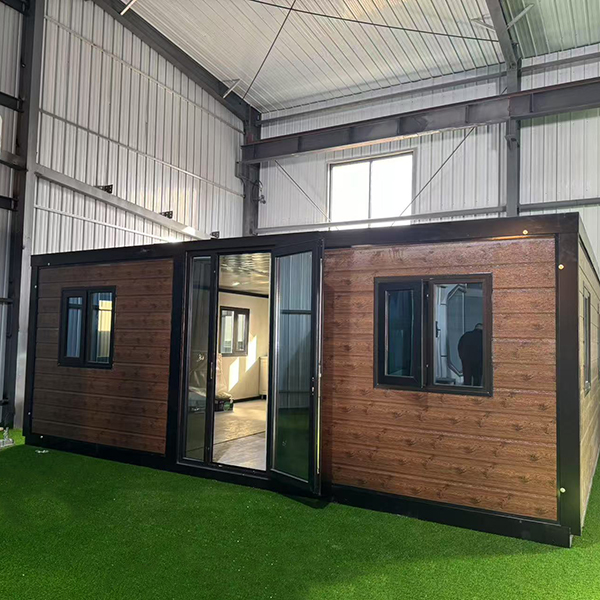
A folding house changes how you think about square meters. A 20-ft unit ships at 2.4 m × 2.6 m × 2.8 m—standard truck dimensions. On-site, it expands to 5.8 m × 3.2 m × 2.8 m. That’s 18.5 m² of net interior space, delivered with plumbing rough-ins, electrical busbars, and pre-installed HVAC ducting—all before leaving the factory.
We track deployment conditions closely. In Kenya, clients used the folding room as a mobile clinic—unfolding on red soil, anchoring with ground screws, connecting to a 5 kW solar array within 90 minutes. In Norway, the same model served as a ski-lift ticket booth—operating at -22°C with zero seal failure. What fails isn’t the concept. It’s mismatched specs: undersized hydraulics, non-marine-grade fasteners, or insulation gaps at expansion joints. We eliminated all three.
Customization isn’t an add-on. It’s baked into the workflow. Need ADA-compliant ramp integration? Done during structural welding. Require rooftop PV mounting rails? Embedded in the top plate before powder coating. Want to cluster four units into a courtyard layout? Our BIM team delivers clash-free assembly diagrams—before cutting the first steel beam.
You don’t buy a folding house. You buy deployable capacity.
The most common mistake we see? Treating it like traditional construction. Clients ask, “How much does it cost per square meter?” That’s the wrong metric. The right question is: What’s your cost per functional day of occupancy?
A conventional 20 m² cabin takes 6–10 weeks from permit to keys—and that assumes no rain delays or subcontractor no-shows. Our folding house hits site Monday, deploys Tuesday, and hosts guests Wednesday. That’s 38 fewer days of lost revenue for a boutique lodge. For emergency housing, it’s 38 fewer days of tents and temporary fixes.
Annual production capacity: 20,000 sets. Lead time for standard configurations: 18–22 working days from deposit. Logistics team coordinates FCL/LCL shipping, customs documentation, and last-mile delivery—even to island locations with no port crane access.
After-sales isn’t a department. It’s a protocol. Every unit ships with QR-coded service history, torque specs for every hinge bolt, and direct-line support for field technicians. We don’t send manuals. We send video-guided AR overlays—scan the hinge, see animated torque sequence.
The “folding house Elon Musk” search trend won’t fade. But the real shift isn’t celebrity association—it’s the quiet move toward precision-built, human-scaled spaces that respect time, terrain, and thermal reality. You’ll find them deployed in Sichuan tea plantations, Swiss alpine trailheads, and UAE desert resorts—not because they look flashy, but because they work when nothing else fits.
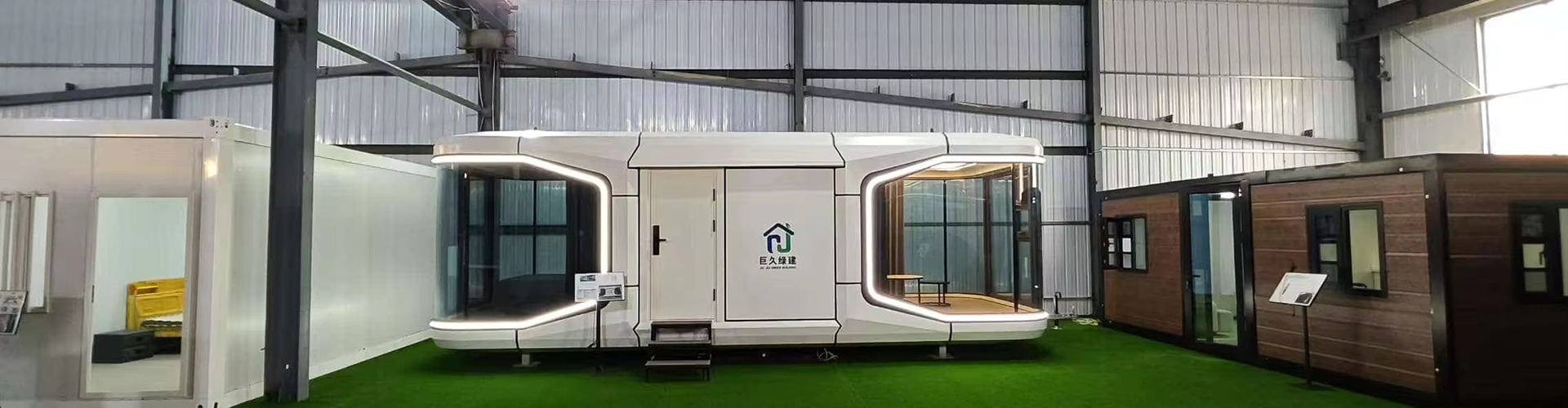
Vizite jujiuhouse.com to download technical drawings, request a site-readiness checklist, or compare the Expandable Folding House against Apple Cabin and SPACE CAPSULE models—based on your climate zone, power needs, and deployment timeline.