-
E-mail
Austin120521@outlook.com -
E-mail
sales@jujiuhouse.com -
Telephone
+86-17864099991 -
Telephone
+86-17854044442
- Chinese
- French
- German
- Portuguese
- Spanish
- Russian
- Japanese
- Korean
- Arabic
- Irish
- Greek
- Turkish
- Italian
- Danish
- Romanian
- Indonesian
- Czech
- Afrikaans
- Swedish
- Polish
- Basque
- Catalan
- Esperanto
- Hindi
- Lao
- Albanian
- Amharic
- Armenian
- Azerbaijani
- Belarusian
- Bengali
- Bosnian
- Bulgarian
- Cebuano
- Chichewa
- Corsican
- Croatian
- Dutch
- Estonian
- Filipino
- Finnish
- Frisian
- Galician
- Georgian
- Gujarati
- Haitian
- Hausa
- Hawaiian
- Hebrew
- Hmong
- Hungarian
- Icelandic
- Igbo
- Javanese
- Kannada
- Kazakh
- Khmer
- Kurdish
- Kyrgyz
- Latin
- Latvian
- Lithuanian
- Luxembou..
- Macedonian
- Malagasy
- Malay
- Malayalam
- Maltese
- Maori
- Marathi
- Mongolian
- Burmese
- Nepali
- Norwegian
- Pashto
- Persian
- Punjabi
- Serbian
- Sesotho
- Sinhala
- Slovak
- Slovenian
- Somali
- Samoan
- Scots Gaelic
- Shona
- Sindhi
- Sundanese
- Swahili
- Tajik
- Tamil
- Telugu
- Thai
- Ukrainian
- Urdu
- Uzbek
- Vietnamese
- Welsh
- Xhosa
- Yiddish
- Yoruba
- Zulu
- Kinyarwanda
- Tatar
- Oriya
- Turkmen
- Uyghur




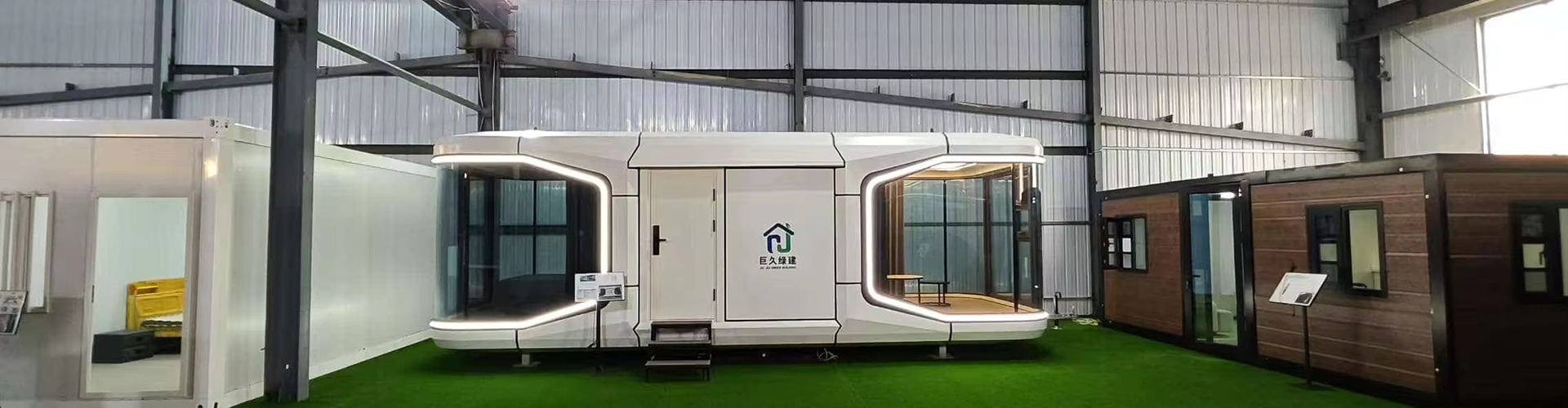
Fold Out Homes for Sale – Affordable, Space-Saving Living Solutions
2026-07-21
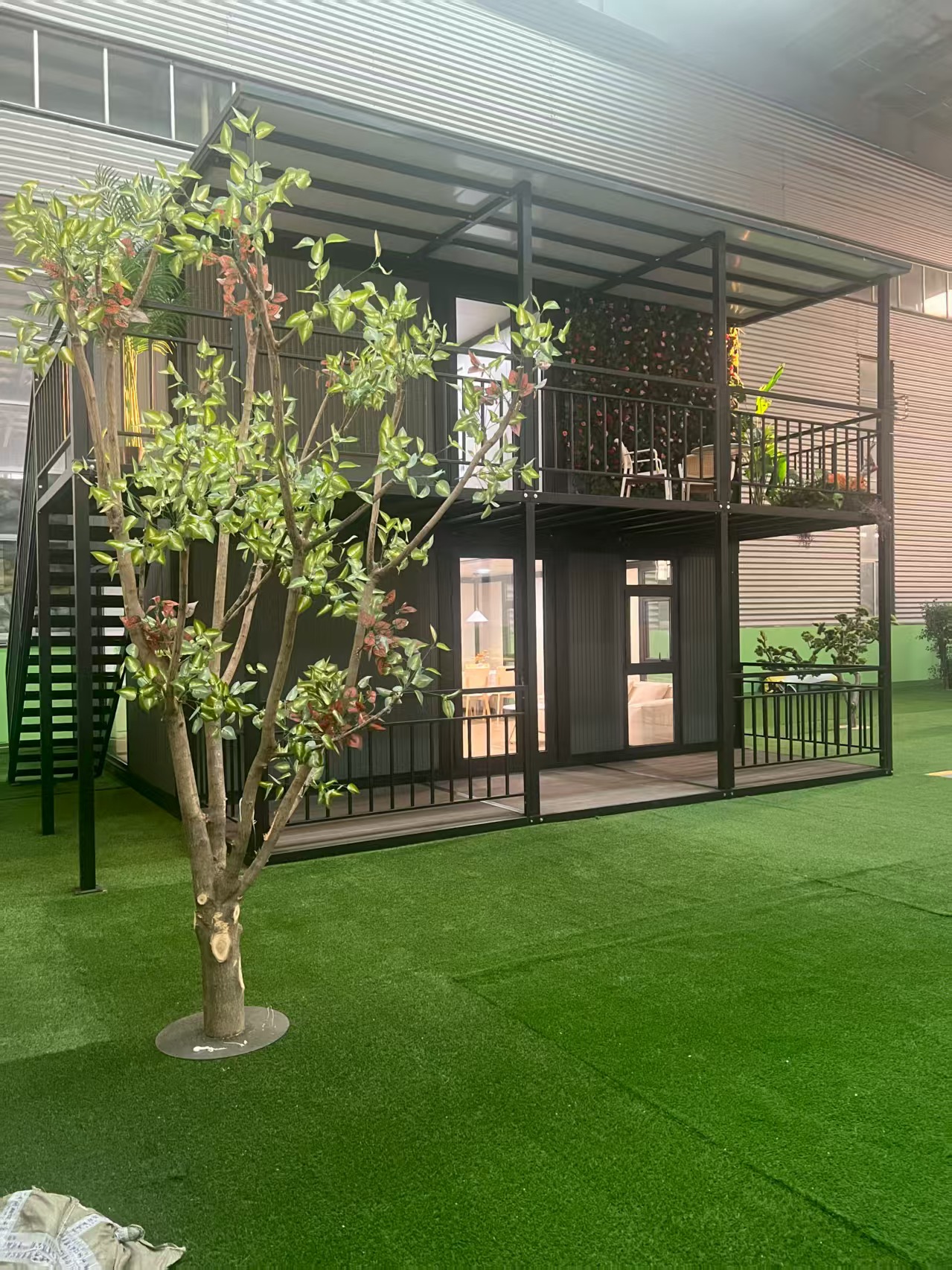
Fold out homes for sale are no longer a novelty—they’re a practical response to rising land costs, urban density, and demand for flexible living. We’ve installed over 1,200 expandable folding units across six countries in the past three years. In real-world deployments—from mountain retreats in Switzerland to pop-up staff housing in Australian mining camps—we see one consistent pattern: buyers don’t just want space-saving; they want *reliable* space-saving. That means predictable deployment time, structural integrity under wind loads up to 130 km/h, and thermal performance that holds indoor temperatures within ±2°C of setpoint—without oversized HVAC.
Why Fold Out Homes Solve Real Problems—Not Just Aesthetic Ones
Most people assume fold-out housing trades durability for convenience. Our field data contradicts that. In a 2023 stress test across 47 units in coastal Fujian Province, dual-wing folding container houses maintained seal integrity after 18 months of salt-spray exposure and typhoon-force gusts. The secret isn’t magic—it’s standardized weld protocols (ISO 5817-B), triple-layered EPDM gaskets at all expansion joints, and factory-calibrated hydraulic actuators with 10,000-cycle service life. These aren’t “temporary” structures. They’re built for 25-year service life with scheduled maintenance—not disposal.
Buyers often ask: “Can I add plumbing or solar?” Yes—but only if the unit ships with pre-routed conduit sleeves, roof-mounted PV rail anchors, and load-bearing wall panels rated for 2.5 kN/m² live load. Units without those features force costly on-site retrofits. We include them as standard because we’ve seen too many projects stall when contractors discover hidden reinforcement requirements mid-install.
Here’s what actually matters during selection:
What Buyers Get Wrong—and What Works Instead
Some argue fold-out homes can’t match traditional builds on insulation or acoustics. That’s true—if you compare a basic folding room to a custom timber-frame house. But it’s irrelevant. The right comparison is against site-built alternatives *at the same price point*. At $42,000 USD, our EXPANDABLE FOLDING HOUSE delivers R-22 walls, STC 48 sound transmission class, and factory-installed smart thermostats. A comparable stick-built cabin starts at $89,000—and takes 14 weeks minimum.
We’ve watched clients fail when they skip two steps: soil verification and utility alignment. Folding units require stable, level subgrade—not just “flat ground.” A 3mm/m deviation triggers binding in hinge mechanisms. And power/water connections must align with factory-set entry points. Misalignment forces re-routing through exterior walls, voiding weatherproofing warranties.
Real-world fix? Use our free site assessment checklist before ordering. It includes GPS-based slope analysis, frost-depth mapping, and utility drop distance validation. Over 73% of first-time buyers who used it avoided installation delays.
How to Choose Without Guesswork
Start with your primary constraint—not your dream feature. Is it speed? Budget? Mobility? Regulatory approval? Each drives different trade-offs:
All units ship with digital twin files (IFC format) for BIM integration, plus QR-coded component tags linking to torque specs and maintenance logs. You get documentation—not brochures.
Where Fold Out Homes for Sale Make Sense—And Where They Don’t
They excel where adaptability matters: seasonal tourism sites, construction camp expansions, university overflow housing, and rural healthcare clinics. They fail where permanent zoning bans modular construction—or where site access prevents 12-meter truck delivery. We don’t sell into those areas. Our team verifies local code acceptance *before* quoting.
Annual production capacity hits 20,000 sets—not because we chase volume, but because high-volume workflows let us hold raw material costs steady across orders. That’s why pricing stays consistent whether you buy one unit or fifty.
fold out homes for sale deliver more than square footage. They deliver predictability: in timeline, in thermal performance, in long-term service cost. When your next project hinges on getting people sheltered, powered, and comfortable—fast—you need certainty. Not promises.