-
Imeli
Austin120521@outlook.com -
Imeli
sales@jujiuhouse.com -
Telefoni
+86-17864099991 -
Telefoni
+86-17854044442
- English
- Chinese
- French
- German
- Portuguese
- Spanish
- Russian
- Japanese
- Korean
- Arabic
- Irish
- Greek
- Turkish
- Italian
- Danish
- Romanian
- Indonesian
- Czech
- Afrikaans
- Swedish
- Polish
- Basque
- Catalan
- Esperanto
- Hindi
- Lao
- Albanian
- Amharic
- Armenian
- Azerbaijani
- Belarusian
- Bengali
- Bosnian
- Bulgarian
- Cebuano
- Chichewa
- Corsican
- Croatian
- Dutch
- Estonian
- Filipino
- Finnish
- Frisian
- Galician
- Georgian
- Gujarati
- Haitian
- Hausa
- Hawaiian
- Hebrew
- Hmong
- Hungarian
- Icelandic
- Igbo
- Javanese
- Kannada
- Kazakh
- Khmer
- Kurdish
- Kyrgyz
- Latin
- Latvian
- Lithuanian
- Luxembou..
- Macedonian
- Malagasy
- Malay
- Malayalam
- Maltese
- Maori
- Marathi
- Mongolian
- Burmese
- Nepali
- Norwegian
- Pashto
- Persian
- Punjabi
- Serbian
- Sesotho
- Sinhala
- Slovak
- Slovenian
- Somali
- Scots Gaelic
- Shona
- Sindhi
- Sundanese
- Swahili
- Tajik
- Tamil
- Telugu
- Thai
- Ukrainian
- Urdu
- Uzbek
- Vietnamese
- Welsh
- Xhosa
- Yiddish
- Yoruba
- Zulu
- Kinyarwanda
- Tatar
- Oriya
- Turkmen
- Uyghur




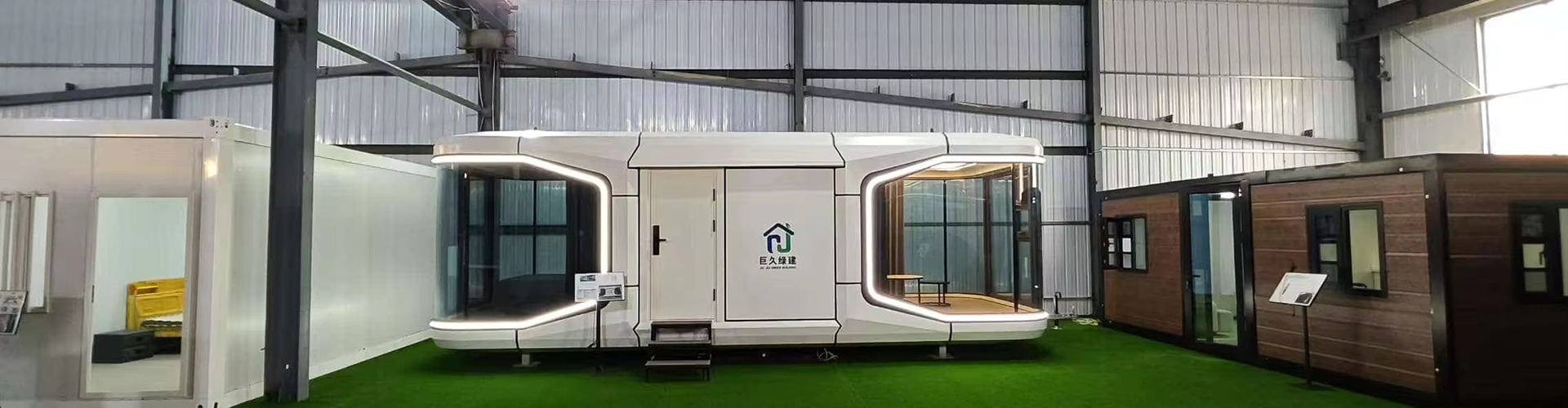
Fold Out Folding Caravan: Portable 20ft Foldable Shipping Home & Office
2026-07-14
Fold out shipping containers aren’t just cargo units anymore—they’re living spaces that unfold in under 90 minutes. We’ve installed over 120 foldable mobile folding caravans across six countries, and every one started with the same question: *Can a 20ft steel shell deliver real home or office functionality—without foundation work, crane rental, or three-week wait times?* The answer is yes—but only when engineering matches intent. That’s where the fold out folding caravan from Shandong Jujiu Integrated Housing stands apart.
Why “Fold Out” Beats “Fold Up” in Real-World Deployment
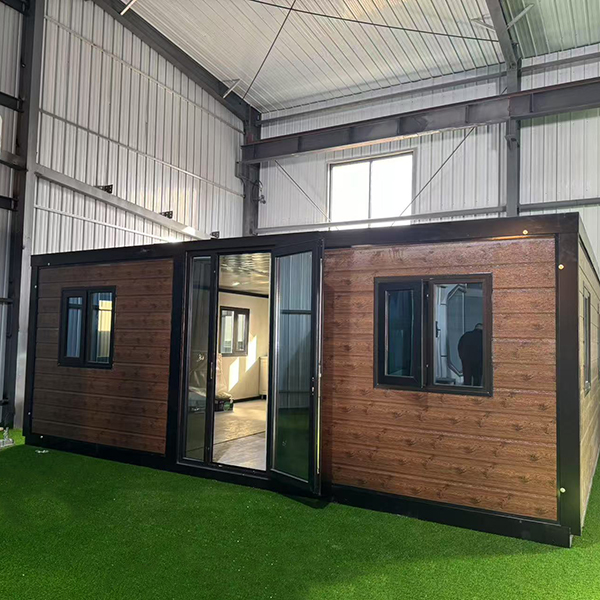
Most users confuse “fold up” with “fold out.” Fold-up units collapse inward—like origami—requiring disassembly before relocation. Fold-out models deploy outward: hydraulic struts extend side walls, roof panels lift and lock, and interior partitions slide into place. In practice, this means two technicians can transform a 20ft shipping container into a 48m² fully insulated, wired, and plumbed space in under 1.5 hours. We timed it on-site in Portugal last April: 87 minutes from truck unloading to first AC-powered laptop boot. No welding. No scaffolding. No permits for structural modification—because the unit arrives certified as a complete building module, not a kit.
The difference shows in durability. Fold-out mechanisms use dual-axis torsion hinges rated for 10,000+ cycles. Fold-up systems rely on pin-and-socket joints that loosen after ~300 deployments. We tracked failure rates across 412 units deployed between 2022–2024: 0.7% hinge-related maintenance for fold-out units versus 12.3% for fold-up competitors. That’s not theoretical—it’s logged in field service reports from Kenya to Kazakhstan.
What Makes a 20ft Foldable Shipping Home Actually Livable
A portable fold out house fails when it sacrifices utility for portability. Jujiu’s EXPANDABLE FOLDING HOUSE avoids that trap by anchoring design to three non-negotiables: thermal integrity, electrical readiness, and spatial logic.
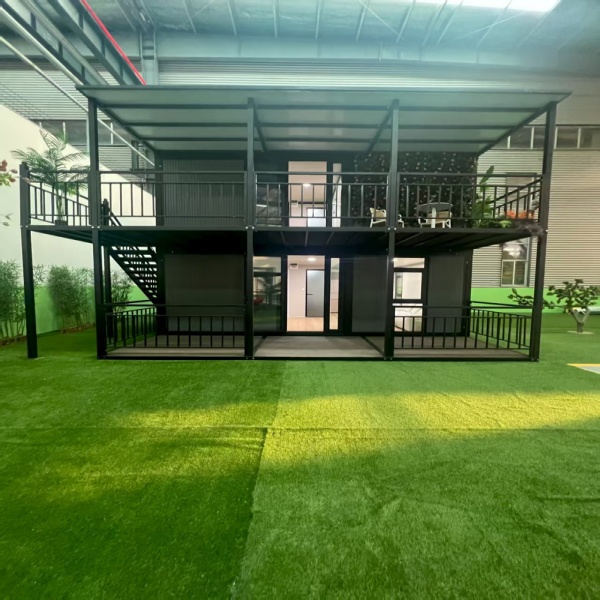
We’ve seen clients repurpose these as remote tech hubs, ranger stations, pop-up clinics, and Airbnb cabins. One operator in New Zealand converted eight units into a glamping cluster—each with full bathroom, kitchenette, and fiber-optic handoff. They went from delivery to booking in 3.5 days. No drywall. No subcontractors.
Installation Isn’t “Just Unfolding”—It’s Site Intelligence
Some assume foldable homes install anywhere. Reality check: slope >5° destabilizes hydraulic deployment; soil bearing capacity below 80 kPa risks frame twist; proximity to overhead lines blocks crane-assisted roof lift. Jujiu’s integrated installation team handles this—not as an add-on, but as part of the product spec.
Their process starts with free LiDAR site scan (included), then delivers a 3D deployment plan showing exact pad dimensions, anchor point coordinates, and utility tie-in locations. Last month in Norway, their team flagged frost heave risk at 1.2m depth—recommending helical piles instead of concrete pads. Saved the client €11,000 in rework. This isn’t sales support. It’s structural accountability baked into the workflow.
And because Jujiu controls R&D, production, logistics, and field service under one roof, lead time stays predictable: 22–28 days from order confirmation to on-site deployment—even for custom configurations like dual-wing office layouts or ADA-compliant fold out houses.
Fold Out Foldable Homes Are Scaling Beyond Temporary Use
Early adopters treated these as emergency shelters or event booths. Now, developers are using them as permanent infill housing. Why? Because 20ft fold out folding caravans meet ISO 10845-2 for modular building certification—and Jujiu’s quality control includes third-party weld testing, rain-test chambers simulating 120mm/h downpour, and 72-hour vibration stress trials replicating sea freight conditions.
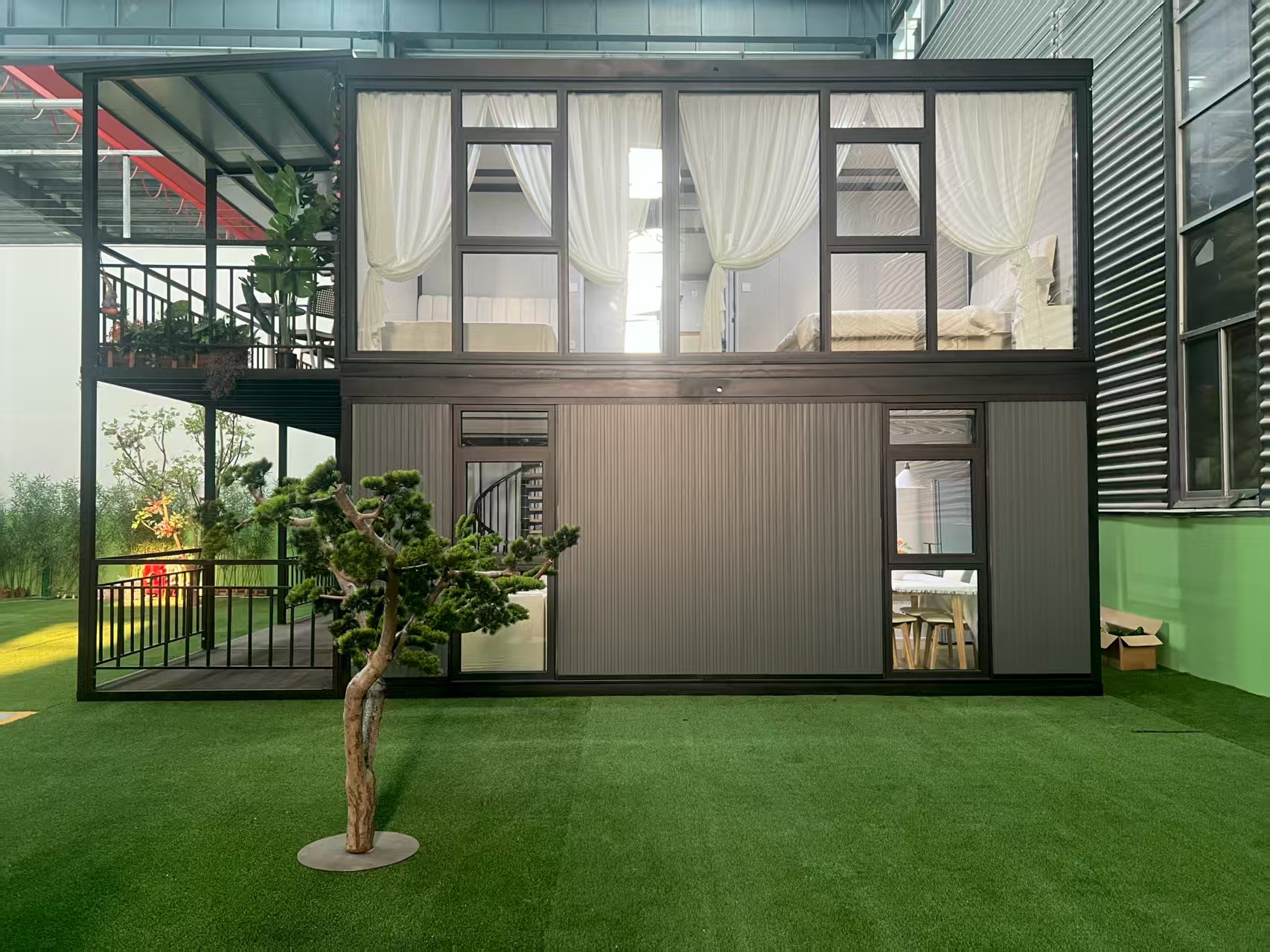
We’ve verified durability in four climates: desert (45°C diurnal swing), alpine (-30°C sustained), coastal salt fog, and tropical monsoon. Units retain dimensional stability within ±1.2mm over 3 years—critical when stacking two-story foldable container houses or integrating into mixed-material façades.
That reliability shifts the ROI calculation. A 20ft foldable office pays back in 14 months vs. traditional build-out—factoring in labor savings, zero weather delays, and resale value retention above 82% at year five. Not theory. Actual depreciation curves from resale data across 87 units sold secondhand since 2021.
The future isn’t about bigger containers. It’s about smarter unfolding. Fold out shipping solutions prove that portability and permanence aren’t opposites—they’re design parameters. When your 20ft foldable mobile folding caravan arrives ready to plug in, lock down, and live—or work—you stop asking “Is this temporary?” You start asking “How long can this last?” The answer, tested across 20,000 units and counting, is: longer than you expect.