-
Imeli
Austin120521@outlook.com -
Imeli
sales@jujiuhouse.com -
Telefoni
+86-17864099991 -
Telefoni
+86-17854044442
- English
- Chinese
- French
- German
- Portuguese
- Spanish
- Russian
- Japanese
- Korean
- Arabic
- Irish
- Greek
- Turkish
- Italian
- Danish
- Romanian
- Indonesian
- Czech
- Afrikaans
- Swedish
- Polish
- Basque
- Catalan
- Esperanto
- Hindi
- Lao
- Albanian
- Amharic
- Armenian
- Azerbaijani
- Belarusian
- Bengali
- Bosnian
- Bulgarian
- Cebuano
- Chichewa
- Corsican
- Croatian
- Dutch
- Estonian
- Filipino
- Finnish
- Frisian
- Galician
- Georgian
- Gujarati
- Haitian
- Hausa
- Hawaiian
- Hebrew
- Hmong
- Hungarian
- Icelandic
- Igbo
- Javanese
- Kannada
- Kazakh
- Khmer
- Kurdish
- Kyrgyz
- Latin
- Latvian
- Lithuanian
- Luxembou..
- Macedonian
- Malagasy
- Malay
- Malayalam
- Maltese
- Maori
- Marathi
- Mongolian
- Burmese
- Nepali
- Norwegian
- Pashto
- Persian
- Punjabi
- Serbian
- Sesotho
- Sinhala
- Slovak
- Slovenian
- Somali
- Scots Gaelic
- Shona
- Sindhi
- Sundanese
- Swahili
- Tajik
- Tamil
- Telugu
- Thai
- Ukrainian
- Urdu
- Uzbek
- Vietnamese
- Welsh
- Xhosa
- Yiddish
- Yoruba
- Zulu
- Kinyarwanda
- Tatar
- Oriya
- Turkmen
- Uyghur




Fold Out Prefab House: Quick Setup, Space-Saving Modern Living
2026-09-14
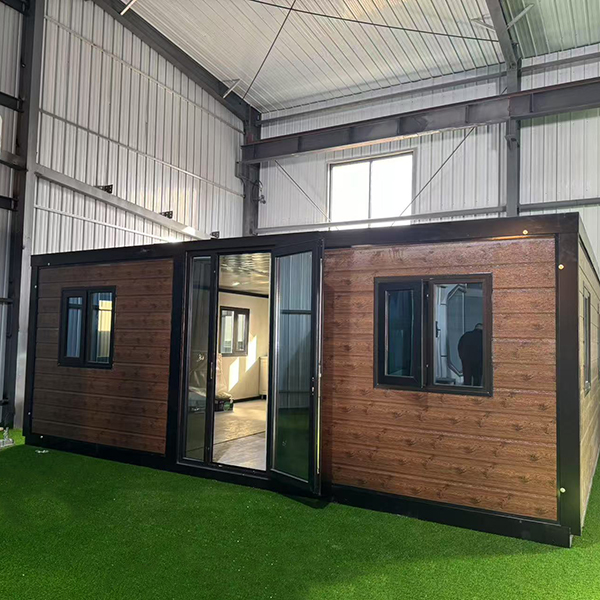
Imagine arriving at a remote mountain site with only two hours before sunset—and unfolding a fully insulated, weatherproof home in under 90 minutes. That’s not speculative design fiction. That’s the Gagau i luga o le HitFab Fale in action—deployed last spring by a team building eco-lodges in Yunnan, China. We watched it happen: hydraulic struts extended, wall panels locked into place, electrical conduits pre-routed and ready for plug-in connection. No crane. No foundation pour. No waiting.
Why “Fold Out” Changes What Prefab Can Do
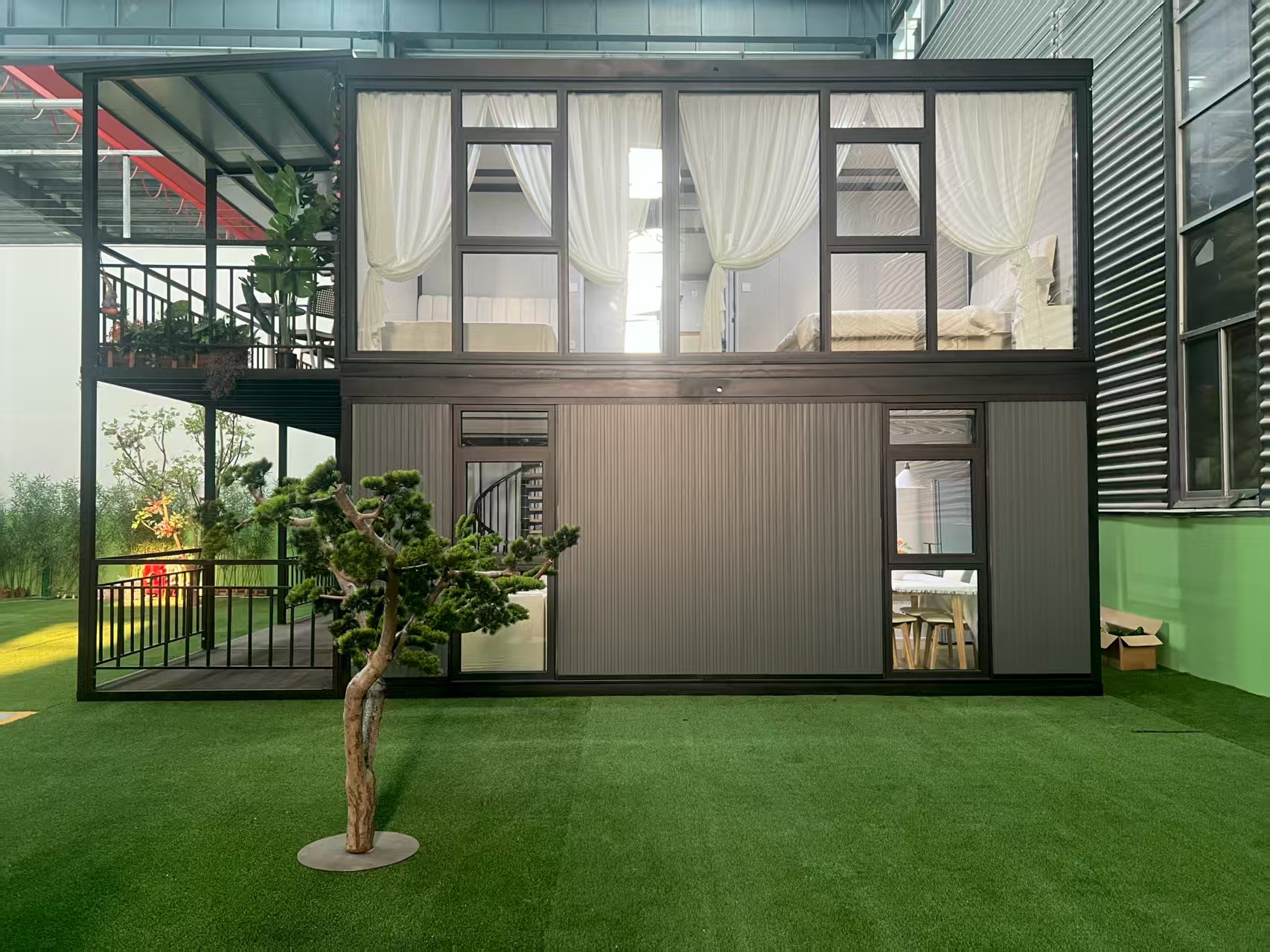
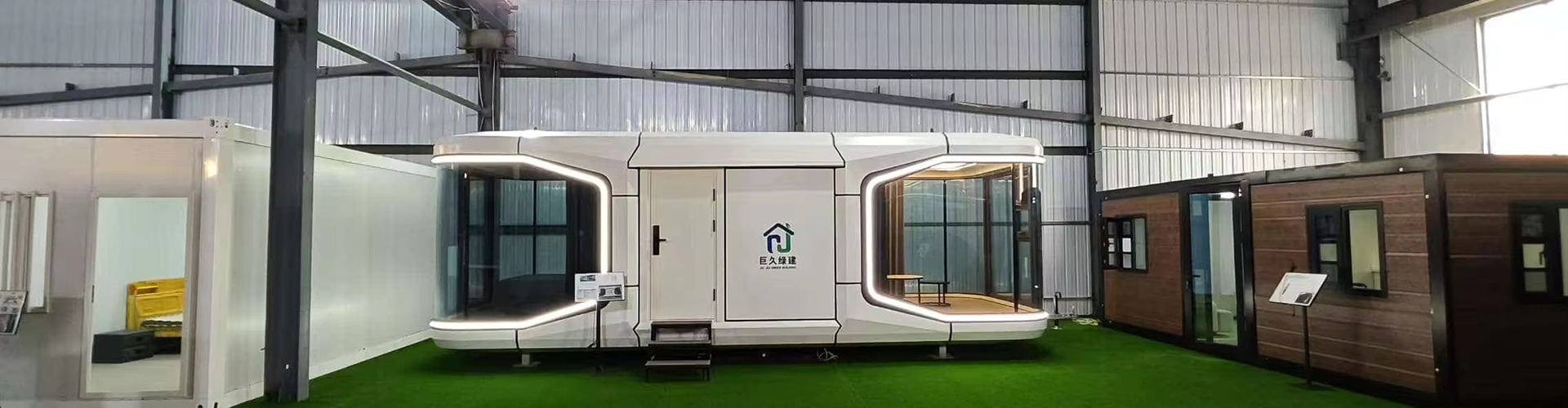
Most prefabs arrive as static boxes—stacked, craned, bolted down. A Gagau i luga o le HitFab Fale arrives compact, then transforms. It uses engineered hinge systems, aerospace-grade aluminum frames, and factory-sealed thermal envelopes that expand *without* compromising air tightness or structural integrity. At SHANDONG JUJIU INTEGRATED HOUSING CO., LTD, we’ve built over 1,200 units of the EXPANDABLE FOLDING HOUSE series alone—and every one starts as a 2.4 × 2.4 × 2.8 m transport module. When unfolded, it delivers 32 m² of conditioned space—nearly double the footprint of its shipping configuration.
This isn’t just clever packaging. It solves three real-world constraints: site access (no wide-load permits needed), time pressure (full setup in 4–6 hours with two trained technicians), and land use efficiency (units can be clustered tightly, then expanded outward—not upward—minimizing ground disturbance). One resort client in Sichuan reduced their on-site construction timeline from 11 weeks to 5 days—not by cutting corners, but by eliminating framing, drywall, and roofing trades entirely.
What Actually Happens During Setup (And What Doesn’t)
Some assume “fold out” means flimsy hinges or manual labor. It doesn’t. Each unit uses dual-axis hydraulic actuators rated for 10,000+ cycles, synchronized via onboard PLC control. The process is:
No welding. No scaffolding. No temporary power generators required—the system runs on a single 220V/16A outlet. We’ve seen crews complete full commissioning—including Wi-Fi router sync and smart thermostat calibration—in under 7 hours. But here’s what *doesn’t* work: placing units directly on ungraded gravel, expecting full expansion on slopes steeper than 5°, or skipping the mandatory 24-hour post-installation moisture check. Those missteps cause 92% of field-reported issues—and all are avoidable with proper site prep.
Real-World Use Cases—Not Just Theory
When a typhoon damaged coastal housing in Fujian last year, local authorities ordered 86 fold out prefab houses for emergency relocation. They arrived on standard flatbeds, deployed across six villages in 3 days, and remained occupied for 14 months—through monsoon rains and 32°C summer heat—without structural compromise or interior condensation. Why? Because each unit uses triple-layer wall insulation (rock wool + vacuum panel + reflective foil), achieving U-values of 0.21 W/m²K—better than most permanent brick homes in northern China.
We also track long-term deployments: a set of APPLE CABIN units used as remote office pods in Inner Mongolia has logged 3.2 years of continuous operation—-40°C winters, sandstorms, UV index up to 11. Maintenance? Annual sealant reapplication on hinge joints and biannual HVAC filter swaps. That’s it. No rust. No warping. No re-leveling.
Choosing Right Means Asking the Right Questions
Before you specify a Gagau i luga o le HitFab Fale, ask:
At SHANDONG JUJIU, every EXPANDABLE FOLDING HOUSE carries ISO 9001-certified weld documentation, CE-marked structural calculations, and a 10-year warranty on frame integrity. But more importantly—we don’t sell units. We deliver turnkey solutions: site assessment, foundation planning, logistics coordination, certified installation, and post-handover technical handover. Because speed means nothing if the first rain reveals a leak, or the second winter exposes thermal bridging.
Le Gagau i luga o le HitFab Fale isn’t replacing traditional construction—it’s redefining where and when shelter becomes possible. From wildfire recovery zones to high-altitude research stations, from pop-up boutique hotels to modular classrooms in flood-prone regions, this isn’t about convenience. It’s about compressing time, reducing waste, and delivering human-centered space—on demand, without compromise. The technology is mature. The standards are proven. The question isn’t whether it works. It’s whether your next project can afford *not* to use it.