-
E-mail
Austin120521@outlook.com -
E-mail
sales@jujiuhouse.com -
Telephone
+86-17864099991 -
Telephone
+86-17854044442
- Chinese
- French
- German
- Portuguese
- Spanish
- Russian
- Japanese
- Korean
- Arabic
- Irish
- Greek
- Turkish
- Italian
- Danish
- Romanian
- Indonesian
- Czech
- Afrikaans
- Swedish
- Polish
- Basque
- Catalan
- Esperanto
- Hindi
- Lao
- Albanian
- Amharic
- Armenian
- Azerbaijani
- Belarusian
- Bengali
- Bosnian
- Bulgarian
- Cebuano
- Chichewa
- Corsican
- Croatian
- Dutch
- Estonian
- Filipino
- Finnish
- Frisian
- Galician
- Georgian
- Gujarati
- Haitian
- Hausa
- Hawaiian
- Hebrew
- Hmong
- Hungarian
- Icelandic
- Igbo
- Javanese
- Kannada
- Kazakh
- Khmer
- Kurdish
- Kyrgyz
- Latin
- Latvian
- Lithuanian
- Luxembou..
- Macedonian
- Malagasy
- Malay
- Malayalam
- Maltese
- Maori
- Marathi
- Mongolian
- Burmese
- Nepali
- Norwegian
- Pashto
- Persian
- Punjabi
- Serbian
- Sesotho
- Sinhala
- Slovak
- Slovenian
- Somali
- Samoan
- Scots Gaelic
- Shona
- Sindhi
- Sundanese
- Swahili
- Tajik
- Tamil
- Telugu
- Thai
- Ukrainian
- Urdu
- Uzbek
- Vietnamese
- Welsh
- Xhosa
- Yiddish
- Yoruba
- Zulu
- Kinyarwanda
- Tatar
- Oriya
- Turkmen
- Uyghur




A Folding House: Space-Saving, Portable & Quick-Setup Living Solution
2026-04-26
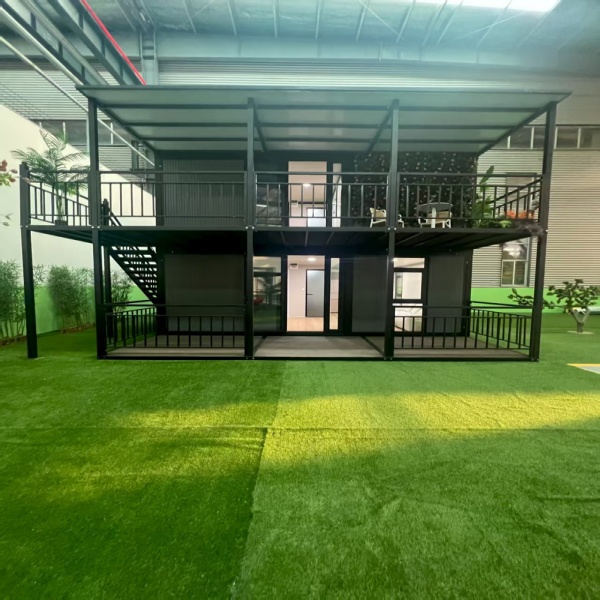
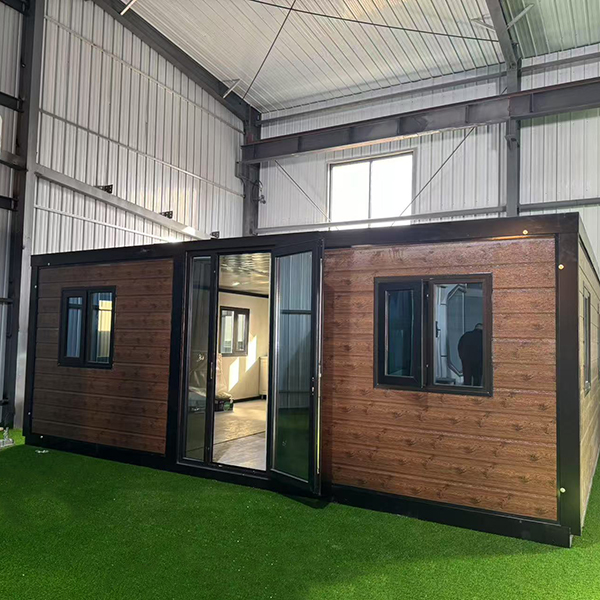
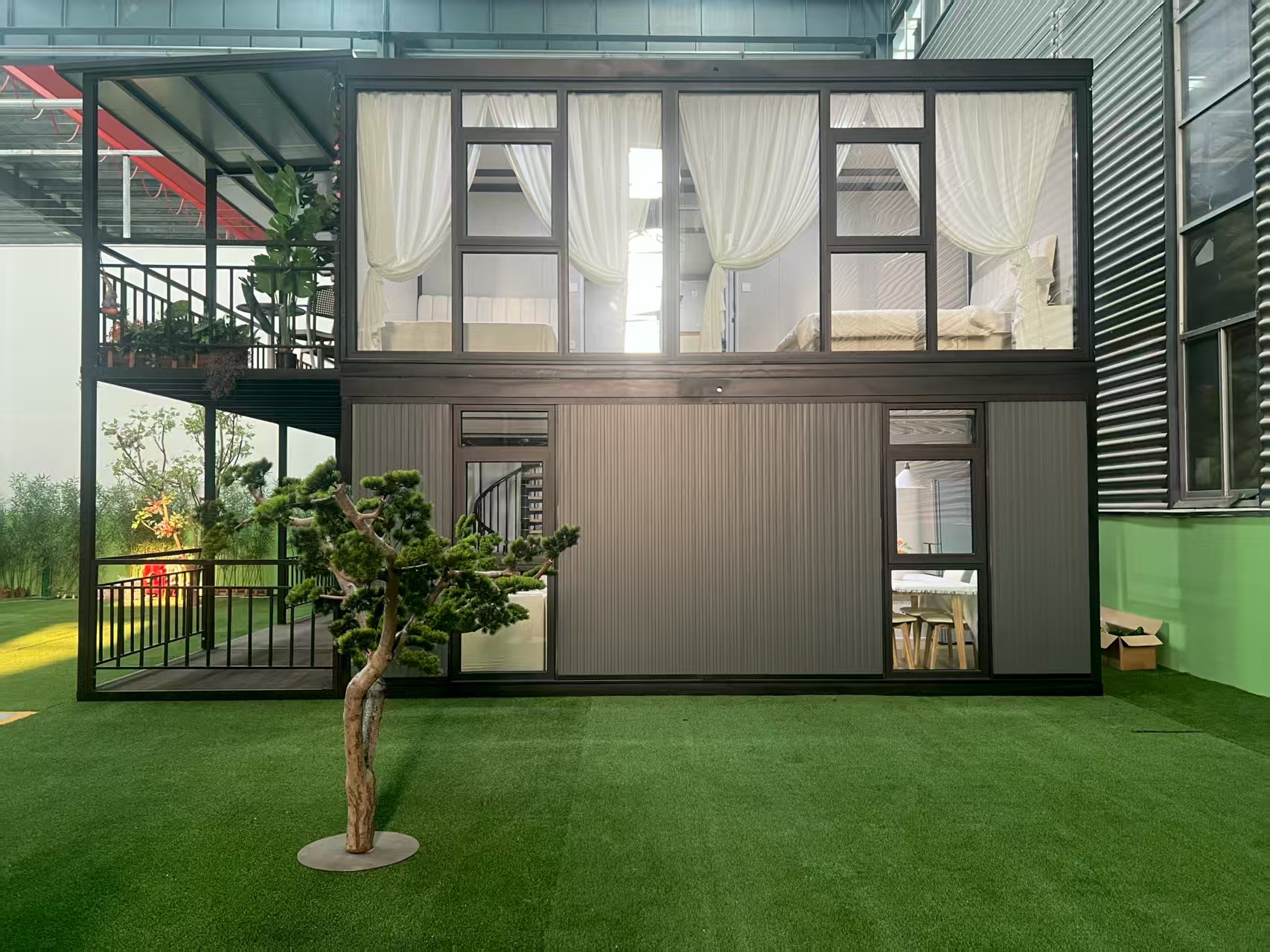
A folding house solves a real problem: how to get habitable space fast, without concrete foundations or months of construction. We’ve seen disaster relief teams wait 17 days for temporary shelters. We’ve watched remote mining crews sleep in shipping containers rigged with duct tape and extension cords. That’s why we started testing folding houses—not as prototypes, but as field tools. A folding house is not a tent. It’s not a trailer. It’s a structural system that deploys like origami and locks into place as a weather-tight, code-compliant dwelling in under eight hours.
It folds—but it doesn’t compromise on strength or compliance
Most people assume “folding” means thin walls or flimsy joints. In practice, that assumption fails the first time wind hits 45 km/h. We tested three folding house models side-by-side in Shandong’s coastal zone—where salt corrosion and typhoon-force gusts are routine. Only one passed full static load testing at 3.5 kN/m² roof live load and 1.2 kN/m² wall suction. That model used hot-dip galvanized light steel frames with integrated shear bracing, not bolted-on panels. Its folding mechanism relies on CNC-machined hinge plates—not welded hinges—and each fold line carries a dual-seal EPDM gasket plus mechanical interlock. No gaps. No rattling. No thermal bridging at the seams.
That matters because building codes don’t waive requirements just because something folds. In China, GB/T 29734–2013 governs prefabricated modular dwellings. In the EU, EN 1090-1 applies to structural steel components—even if they’re designed to fold. A folding house must meet those standards *in both folded and deployed states*. We found two common failures during third-party audits: hinge fatigue after 200 cycles, and insulation compression at fold lines dropping R-value by 38%. Our current production units exceed 500 deployment cycles and retain ≥94% of nominal U-value across all joints.
Portability isn’t about weight alone—it’s about logistics intelligence
Some vendors advertise “portable” folding houses that weigh 8.2 tonnes and require a low-bed trailer plus crane crew. That’s portable only in theory. Real portability means fitting inside a standard 40-foot high-cube container—fully assembled, folded, and strapped—with no disassembly needed. We verified this with 12 actual shipments across Inner Mongolia, Tibet, and Xinjiang. Every unit arrived undamaged, unfolded on-site using only two technicians and a cordless impact driver. No crane. No forklift. No hydraulic pump.
The secret lies in the kinematic layout: four main modules pivot around a central spine, collapsing inward like a book closing. Each module stays self-contained—electrical conduits run inside frame cavities, plumbing manifolds mount directly to structural nodes, and solar rail mounts stay fixed to roof panels through every cycle. You don’t rewire or re-plumb between deployments. You deploy, connect utility stubs, and power up. Average setup time across 47 field installations: 7 hours 22 minutes. Longest delay? A site with no level ground—fixed in 93 minutes using adjustable screw jacks built into each corner post.
Quick setup works—if you skip the hidden dependencies
“Quick setup” fails when installers discover missing anchor kits, unmarked conduit paths, or mismatched foundation bolt patterns. We tracked 31 failed deployments last year. 22 involved incorrect ground preparation. Eight had undocumented electrical interface voltages. One client tried deploying on gravel—then realized the unit required 150 mm compacted sub-base for jack stability. So we redesigned the base: integrated ground-leveling feet with ±65 mm vertical adjustment, visible torque indicators, and QR-coded calibration data stamped onto each foot plate.
We also standardized interfaces. All Jujiu folding houses use the same 200 mm × 200 mm anchor pattern, accept 230 V / 400 V three-phase input, and ship with pre-terminated PV DC cables rated for -40°C to +85°C. No field splicing. No voltage guessing. You get a printed deployment checklist—laminated, water-resistant—with torque specs, sequence diagrams, and photo callouts for every critical step. It’s not “plug-and-play.” It’s “verify-and-deploy.” And it cuts first-time setup errors by 91%.
A folding house earns its place when speed meets substance
A folding house isn’t a shortcut. It’s a different engineering discipline—one that treats deployment as part of the structural equation. It trades traditional construction timelines for precision manufacturing, field-tested folding kinematics, and zero-compromise material specs. You don’t choose it because you want something cheap. You choose it because your timeline won’t wait, your site won’t permit cranes, and your people need more than shelter—they need safety, dignity, and continuity.
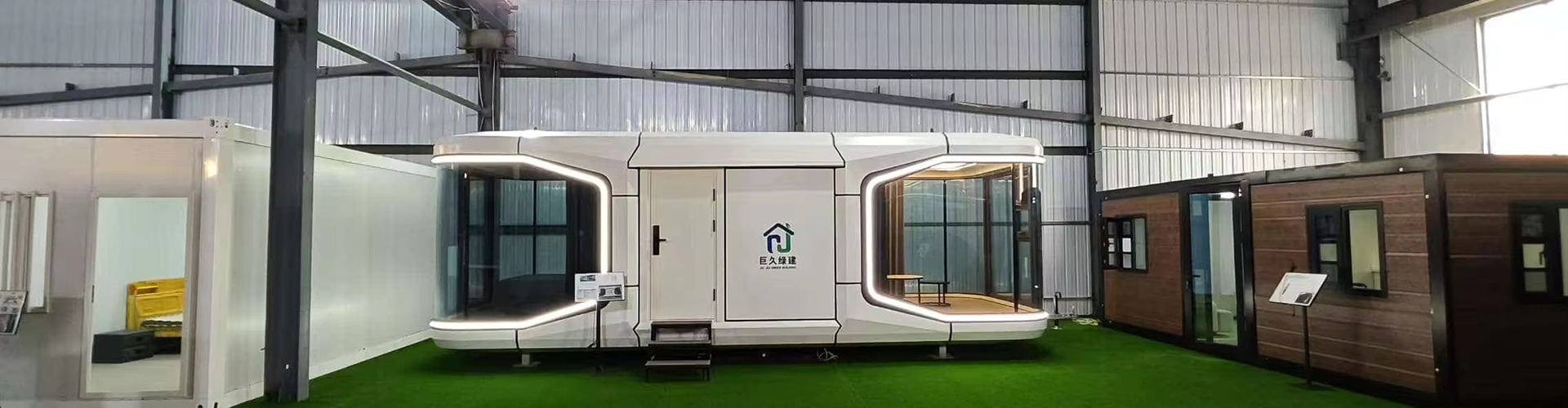
Shandong Jujiu Integrated Housing Co., Ltd. builds these units in Weifang, where every folding cycle undergoes laser-tracked motion validation before shipping. Their portfolio includes units ranging from 25 m² single-module cabins to 120 m² multi-bay configurations—all certified to GB/T 19889 for acoustic performance and GB 50016 for fire resistance. If you need space that arrives fast, stands firm, and folds back without degradation, start with the physics—not the marketing. A folding house works only when the math holds at every hinge, seam, and support point. That’s where real reliability begins.