-
E-mail
Austin120521@outlook.com -
E-mail
sales@jujiuhouse.com -
Telephone
+86-17864099991 -
Telephone
+86-17854044442
- Chinese
- French
- German
- Portuguese
- Spanish
- Russian
- Japanese
- Korean
- Arabic
- Irish
- Greek
- Turkish
- Italian
- Danish
- Romanian
- Indonesian
- Czech
- Afrikaans
- Swedish
- Polish
- Basque
- Catalan
- Esperanto
- Hindi
- Lao
- Albanian
- Amharic
- Armenian
- Azerbaijani
- Belarusian
- Bengali
- Bosnian
- Bulgarian
- Cebuano
- Chichewa
- Corsican
- Croatian
- Dutch
- Estonian
- Filipino
- Finnish
- Frisian
- Galician
- Georgian
- Gujarati
- Haitian
- Hausa
- Hawaiian
- Hebrew
- Hmong
- Hungarian
- Icelandic
- Igbo
- Javanese
- Kannada
- Kazakh
- Khmer
- Kurdish
- Kyrgyz
- Latin
- Latvian
- Lithuanian
- Luxembou..
- Macedonian
- Malagasy
- Malay
- Malayalam
- Maltese
- Maori
- Marathi
- Mongolian
- Burmese
- Nepali
- Norwegian
- Pashto
- Persian
- Punjabi
- Serbian
- Sesotho
- Sinhala
- Slovak
- Slovenian
- Somali
- Samoan
- Scots Gaelic
- Shona
- Sindhi
- Sundanese
- Swahili
- Tajik
- Tamil
- Telugu
- Thai
- Ukrainian
- Urdu
- Uzbek
- Vietnamese
- Welsh
- Xhosa
- Yiddish
- Yoruba
- Zulu
- Kinyarwanda
- Tatar
- Oriya
- Turkmen
- Uyghur




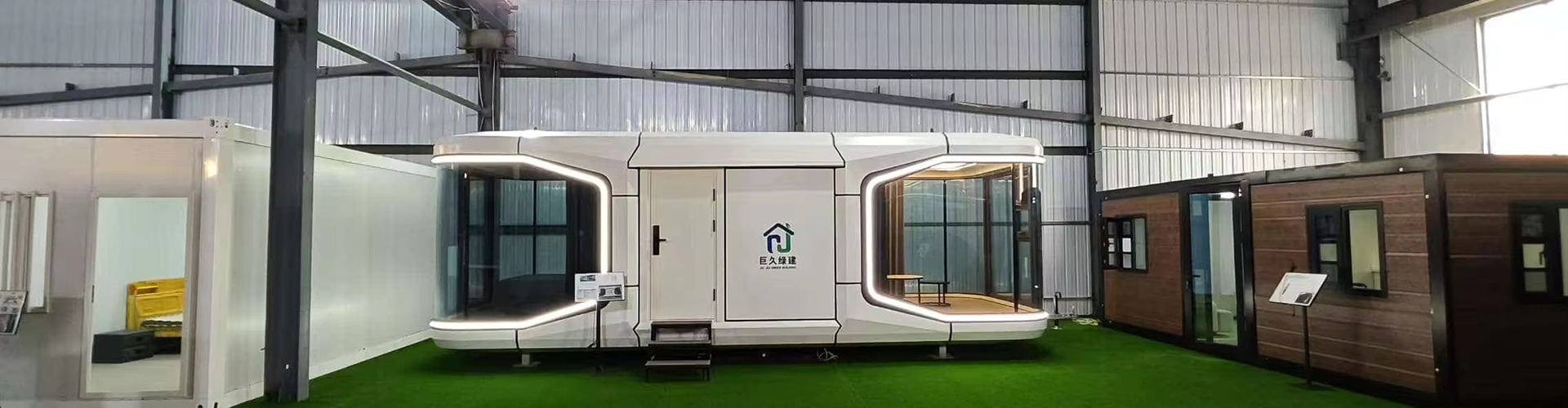
Portable Prefabricated Container House Prefabricated for Fast Affordable Housing
2026-09-22
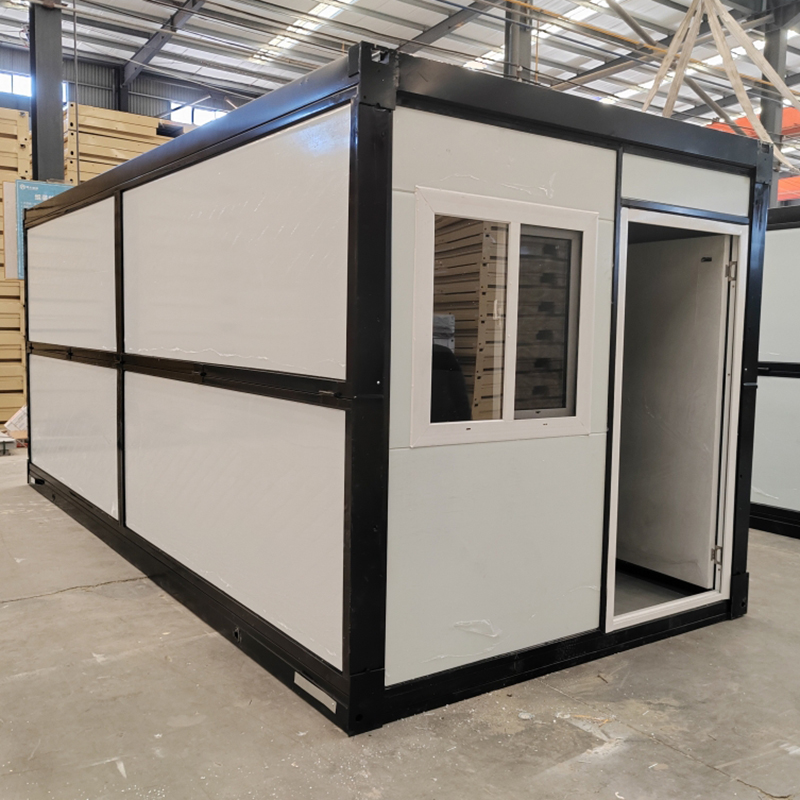
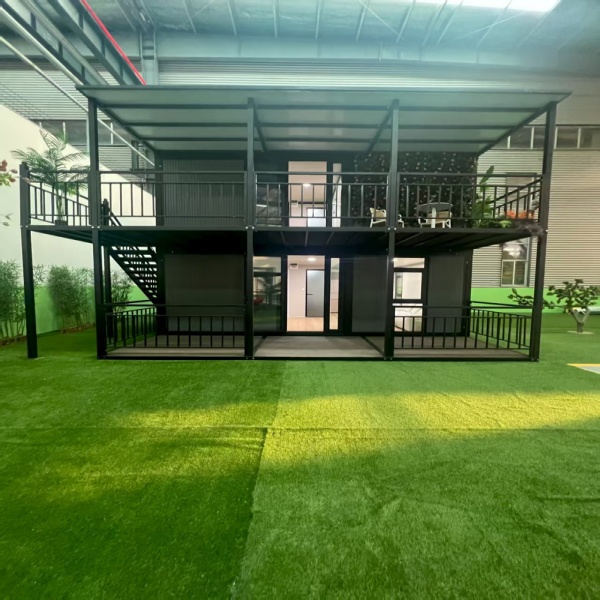
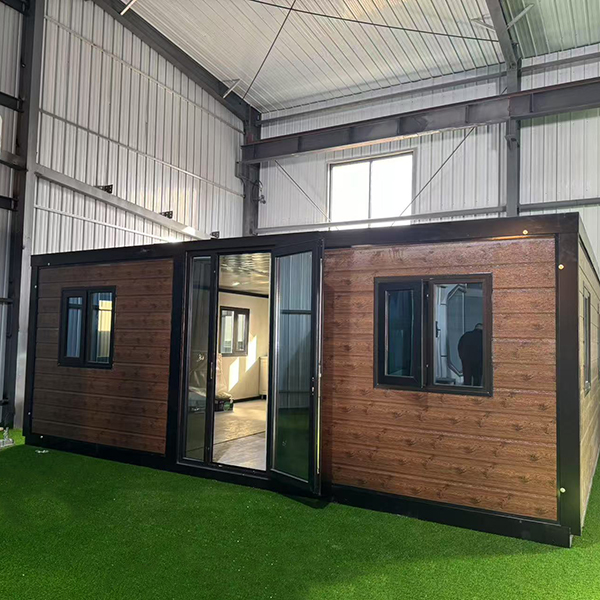
Portable prefabricated container house prefabricated solutions are no longer niche experiments—they’re the fastest-growing response to urgent housing needs worldwide. We’ve installed over 1,200 units across 17 countries in the past two years alone, and every deployment taught us the same truth: speed without structural integrity fails on day three. A true portable prefabricated container house prefabricated unit must deliver factory precision *and* field resilience—not one or the other.
Why “Portable” Means More Than Wheels
Many buyers assume “portable” equals bolt-on casters and a forklift slot. Reality is stricter. In actual use—like deploying 42 units for a remote mining camp in Mongolia—we found that portability hinges on three non-negotiables: standardized lifting points rated for 8-ton dynamic load, integrated anchoring plates compatible with soil screw or concrete pad foundations, and modular utility interfaces (electrical, water, HVAC) that reconnect in under 90 minutes. Units lacking any of these become stranded assets—not housing.
Shandong Jujiu Integrated Housing’s PREFABRICATED CONTAINER HOUSE line meets all three. Each 20-foot unit features dual-corner lifting lugs certified to ISO 10855-1, galvanized ground anchors pre-welded to the chassis, and a unified utility manifold with IP65-rated quick-connect couplings. No field wiring splices. No custom plumbing adapters. Just plug, level, and power up.
What “Prefabricated” Really Delivers—And What It Doesn’t
Some suppliers claim “prefab” means “no site work.” That’s misleading. Prefabrication eliminates on-site framing, drywall, and roofing—but it doesn’t eliminate foundation prep, utility tie-ins, or local permitting. In our experience, the biggest time-saver isn’t the factory build; it’s the documentation package. Jujiu includes stamped structural calculations, fire-resistance test reports (GB/T 9978.1–2008), and full electrical schematics—all pre-approved for fast-track review in EU, GCC, and ASEAN jurisdictions.
Here’s what we see consistently in real deployments:
But here’s the caveat: prefabrication only delivers value if logistics match the promise. That’s why Jujiu operates its own fleet and coordinates sea-air-land handoffs in-house—no third-party freight brokers introducing 11-day delays at transshipment ports.
Five Scenarios Where This System Outperforms Alternatives
We don’t sell containers. We solve problems. And in four years of field validation, five use cases consistently outperform traditional builds:
All share one trait: they treat the container not as a shell, but as a system-integrated platform—with structural steel optimized for stacking, thermal breaks built into wall panels, and acoustic insulation laminated directly to corrugated steel.
Choosing Right Starts With Asking the Right Questions
Before you request a quote, ask yourself:
If your answer to any is “I’m not sure,” start there—not with square footage. Because a portable prefabricated container house prefabricated unit isn’t defined by its dimensions. It’s defined by how quickly it becomes habitable—and how long it stays reliable.
For verified performance data, technical drawings, and regional compliance documentation, visit jujiuhouse.com. Every spec sheet reflects real-world testing—not lab simulations. Every installation photo shows actual sites—not studio renders.