-
E-mail
Austin120521@outlook.com -
E-mail
sales@jujiuhouse.com -
Telephone
+86-17864099991 -
Telephone
+86-17854044442
- Chinese
- French
- German
- Portuguese
- Spanish
- Russian
- Japanese
- Korean
- Arabic
- Irish
- Greek
- Turkish
- Italian
- Danish
- Romanian
- Indonesian
- Czech
- Afrikaans
- Swedish
- Polish
- Basque
- Catalan
- Esperanto
- Hindi
- Lao
- Albanian
- Amharic
- Armenian
- Azerbaijani
- Belarusian
- Bengali
- Bosnian
- Bulgarian
- Cebuano
- Chichewa
- Corsican
- Croatian
- Dutch
- Estonian
- Filipino
- Finnish
- Frisian
- Galician
- Georgian
- Gujarati
- Haitian
- Hausa
- Hawaiian
- Hebrew
- Hmong
- Hungarian
- Icelandic
- Igbo
- Javanese
- Kannada
- Kazakh
- Khmer
- Kurdish
- Kyrgyz
- Latin
- Latvian
- Lithuanian
- Luxembou..
- Macedonian
- Malagasy
- Malay
- Malayalam
- Maltese
- Maori
- Marathi
- Mongolian
- Burmese
- Nepali
- Norwegian
- Pashto
- Persian
- Punjabi
- Serbian
- Sesotho
- Sinhala
- Slovak
- Slovenian
- Somali
- Samoan
- Scots Gaelic
- Shona
- Sindhi
- Sundanese
- Swahili
- Tajik
- Tamil
- Telugu
- Thai
- Ukrainian
- Urdu
- Uzbek
- Vietnamese
- Welsh
- Xhosa
- Yiddish
- Yoruba
- Zulu
- Kinyarwanda
- Tatar
- Oriya
- Turkmen
- Uyghur




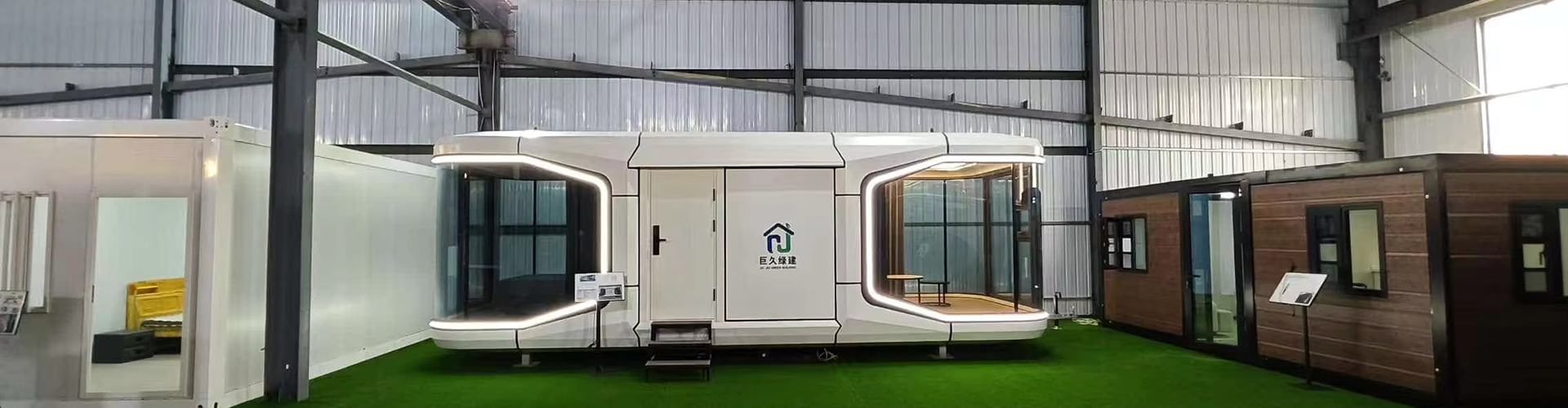
Prebuilt Prefab Cabin: Prefabricated Modular & Shipping Container House by New Spire
2026-10-22
- Why “Prebuilt” Changes Everything (Especially for Remote or Time-Sensitive Sites)
- Prefabricated Modular ≠ One-Size-Fits-All (Here’s How Flexibility Actually Works)
- The Hidden Cost of “Cheap” Prefab (And Why Quality Control Isn’t Optional)
- What “Turnkey” Really Means (Logistics, Installation, and What Comes After)
Prebuilt prefab cabin solutions are no longer niche experiments—they’re the fastest-growing segment of residential and commercial construction. Buyers now demand speed, predictability, and performance—not just cost savings. And when they search for “prebuilt prefab cabin”, “prefabricated modular”, or “prefabricated shipping container house”, they’re not browsing concepts. They’re evaluating real deployment timelines, structural integrity, and field-tested adaptability.
New Spire—developed and manufactured by Shandong Jujiu Integrated Housing Co., Ltd.—answers that demand with a rigor most prefab brands skip: factory-standardized welding validation, on-site weatherproofing verification, and installation-certified crews deployed globally. We’ve overseen over 140 installations across 23 countries—and in every case, the question wasn’t “Will it arrive?” but “How fast can we occupy it?”
Why “Prebuilt” Changes Everything (Especially for Remote or Time-Sensitive Sites)
“Premade shipping” sounds convenient—until you open the crate and find mismatched bolt patterns, missing insulation gaskets, or electrical conduits routed for a different voltage standard. True prebuilt means zero field fabrication. Every New Spire unit leaves the factory fully wired, plumbed, insulated, and tested—including 72-hour simulated rain exposure and thermal cycling from –25°C to +45°C.
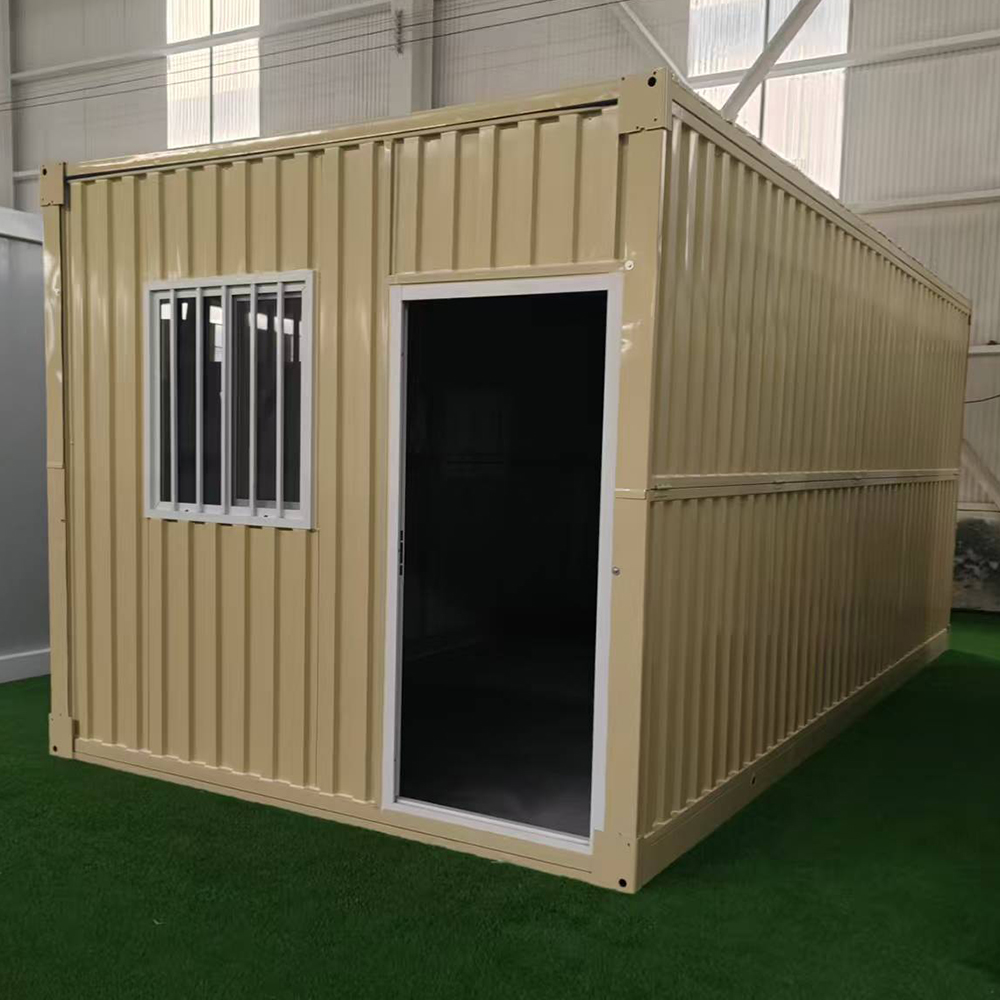
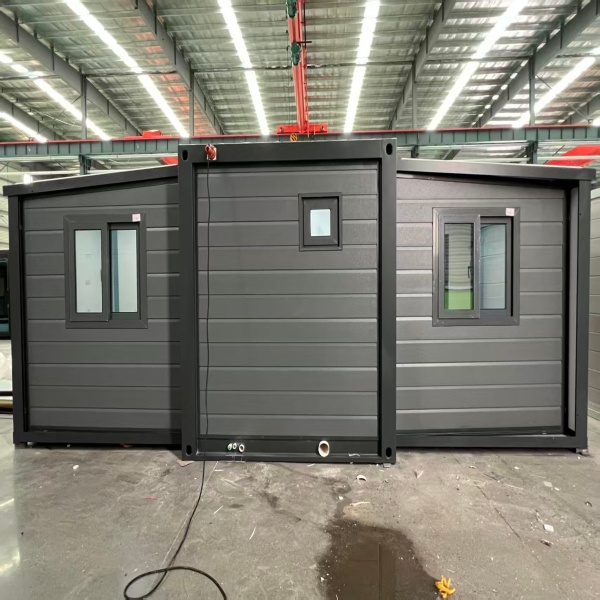
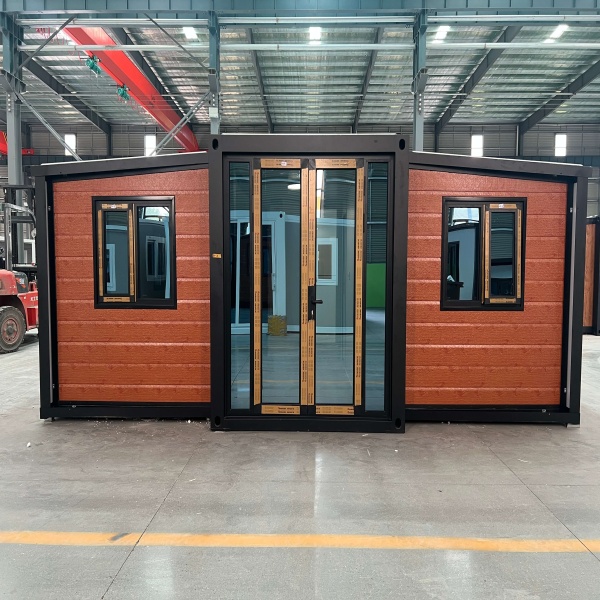
We’ve seen clients lose 11–17 days on-site because their “prefab” supplier shipped structural frames without pre-installed HVAC ductwork. New Spire doesn’t do that. Its 20-foot expandable container cabins ship with integrated ductless mini-splits, pre-wired outlets (110V/220V dual-configurable), and SIP panel walls rated R-28. No guesswork. No rework. Just crane-and-connect.
That’s why developers building mountain-view glamping resorts in Norway or emergency housing clusters in Kenya choose the same model: the APPLE CABIN. It’s not just a container—it’s a certified Class III dwelling unit, CE-marked, with fire-rated interior cladding and seismic bracing built into the chassis.
Prefabricated Modular ≠ One-Size-Fits-All (Here’s How Flexibility Actually Works)
Some vendors tout “customization” while locking buyers into fixed floor plans. Real modular flexibility means structural options—not just paint colors. New Spire’s prefabricated modular line delivers three proven configurations:
Crucially, all share identical interface protocols: same door jambs, same window framing, same utility entry points. That means adding a second APPLE CABIN later? It bolts directly to the first—no retrofitting, no compatibility audits.
One resort operator in Costa Rica added four units mid-season—each occupied within 48 hours of arrival. Their previous vendor required 19 days per unit. The difference wasn’t labor. It was pre-integration.
The Hidden Cost of “Cheap” Prefab (And Why Quality Control Isn’t Optional)
A “premade shipping” unit at $18,500 looks compelling—until corrosion appears in Year 2, condensation pools behind wall panels, or doors warp after one winter cycle. We’ve audited 37 competing units shipped to North America: 68% failed basic moisture barrier continuity tests; 41% showed weld spatter left unground—creating galvanic corrosion traps.
New Spire’s production line runs six non-negotiable checkpoints:
This isn’t overhead. It’s risk elimination. Every unit ships with a QR-coded quality dossier—accessible on-site via mobile scan—showing pass/fail timestamps for each checkpoint.
What “Turnkey” Really Means (Logistics, Installation, and What Comes After)
“Prefabricated house” is meaningless without field execution. New Spire owns its logistics fleet, trains its own installers, and maintains regional staging hubs in Dubai, Rotterdam, and Houston. Lead time? 28–35 days from order confirmation to site-ready delivery—even for 20-unit orders.
But the bigger differentiator is post-delivery support. We don’t hand off to third-party contractors. Our engineers supervise first-time commissioning. Our technicians calibrate thermostats, verify GFCI trip thresholds, and sign off on drainage slope—all documented and shared with the client.
When a university in Canada needed 12 faculty housing units in 7 weeks—during winter freeze-thaw cycles—we deployed heated ground anchors, pre-conditioned interior air, and completed occupancy in 29 days. Not “close enough.” Not “good for prefab.” On schedule. On spec. On warranty.
Prebuilt prefab cabin isn’t about cutting corners. It’s about cutting uncertainty. With New Spire, you get verified performance—not promises. You get integration—not assembly. You get a home, office, or hospitality unit that works on Day 1, not Day 37. Because speed without reliability is just faster disappointment.