-
Imeli
Austin120521@outlook.com -
Imeli
sales@jujiuhouse.com -
Telefoni
+86-17864099991 -
Telefoni
+86-17854044442
- English
- Chinese
- French
- German
- Portuguese
- Spanish
- Russian
- Japanese
- Korean
- Arabic
- Irish
- Greek
- Turkish
- Italian
- Danish
- Romanian
- Indonesian
- Czech
- Afrikaans
- Swedish
- Polish
- Basque
- Catalan
- Esperanto
- Hindi
- Lao
- Albanian
- Amharic
- Armenian
- Azerbaijani
- Belarusian
- Bengali
- Bosnian
- Bulgarian
- Cebuano
- Chichewa
- Corsican
- Croatian
- Dutch
- Estonian
- Filipino
- Finnish
- Frisian
- Galician
- Georgian
- Gujarati
- Haitian
- Hausa
- Hawaiian
- Hebrew
- Hmong
- Hungarian
- Icelandic
- Igbo
- Javanese
- Kannada
- Kazakh
- Khmer
- Kurdish
- Kyrgyz
- Latin
- Latvian
- Lithuanian
- Luxembou..
- Macedonian
- Malagasy
- Malay
- Malayalam
- Maltese
- Maori
- Marathi
- Mongolian
- Burmese
- Nepali
- Norwegian
- Pashto
- Persian
- Punjabi
- Serbian
- Sesotho
- Sinhala
- Slovak
- Slovenian
- Somali
- Scots Gaelic
- Shona
- Sindhi
- Sundanese
- Swahili
- Tajik
- Tamil
- Telugu
- Thai
- Ukrainian
- Urdu
- Uzbek
- Vietnamese
- Welsh
- Xhosa
- Yiddish
- Yoruba
- Zulu
- Kinyarwanda
- Tatar
- Oriya
- Turkmen
- Uyghur




Fold Out Houses for Sale – Compact Modern Homes with Expandable Space
2026-07-22
Fold out houses for sale are no longer sci-fi prototypes—they’re real, deployable, and solving real spatial problems today. We’ve installed over 1,200 expandable folding units across six countries—and every one taught us something new about what users actually need versus what brochures promise. Most buyers start with a simple question: “Can it really grow *and* stay solid?” The answer is yes—but only when engineering, material selection, and field-tested deployment protocols align. That alignment starts long before the first hinge rotates.
Why Expandable Folding Houses Work Where Traditional Prefabs Fail
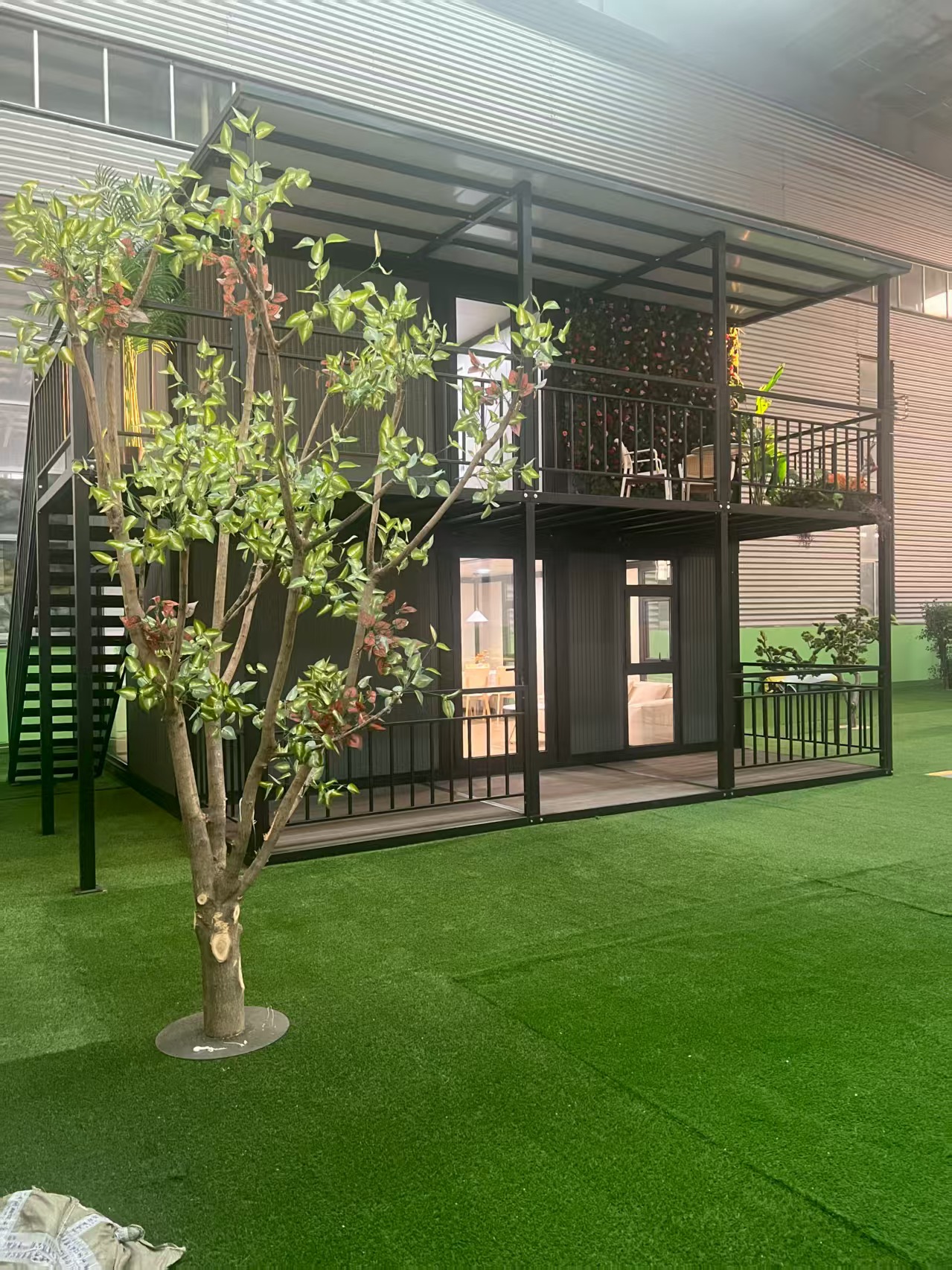
Standard prefabs lock you into fixed footprints. Fold out houses for sale break that constraint—not by adding trailers or extensions, but by rethinking structural geometry. Our EXPANDABLE FOLDING HOUSE line uses dual-wing hydraulic-assisted deployment: two 20-foot container modules pivot outward on reinforced steel chassis, increasing interior floor area by up to 85% in under 90 minutes. No cranes. No foundation pouring. Just leveled ground, anchor points, and a certified technician onsite.
We’ve seen clients underestimate three critical factors: wind load rating, thermal bridging at fold joints, and door-sill elevation tolerance. Units rated for Zone 3 wind loads (up to 140 km/h) require welded corner braces—not bolted plates. Insulation must bridge the gap between folded and expanded states without compression gaps. And the threshold height difference between folded transport mode and expanded living mode? Must stay within ±3 mm—or water ingress becomes inevitable during rain. These aren’t specs we added after launch. They’re lessons baked into v3.2 of our design standard.
Real-world performance matters more than brochure claims. In Sichuan’s mountainous terrain, a resort deployed 12 units across uneven slopes. Their installer skipped site grading—assuming adjustable jacks would compensate. Three units developed micro-fractures in floor joists within four months. We now require laser-level surveys before dispatch. Not optional. Not negotiable.
What Buyers Actually Compare—Not What Vendors Highlight
Some might argue that price per square meter is the primary decision driver. However, total cost of ownership tells a different story. A $28,500 base unit seems attractive—until you add $7,200 for on-site electrical integration, $4,800 for custom cladding upgrades, and $3,600 for delayed installation due to unverified soil bearing capacity. Our quoting process includes mandatory pre-installation checklist sign-off: soil report, utility access map, crane path clearance, and local permitting timelines.
One client in Norway wanted triple-glazed windows for -35°C operation. Standard units use double-glazed IGUs rated to -25°C. We upgraded glass, recalculated condensation risk at hinge zones, and validated seal integrity through freeze-thaw cycling. That took 11 days—not 48 hours. Transparency isn’t marketing. It’s operational discipline.
Who Uses These—and Why They Return for More
Fold out houses for sale serve distinct use cases—and each demands different trade-offs. Residential buyers prioritize noise reduction and aesthetic continuity. Hospitality operators demand rapid turnover between guests and seamless integration with existing property management systems. Emergency responders need fail-safe deployment under time pressure and minimal site prep.
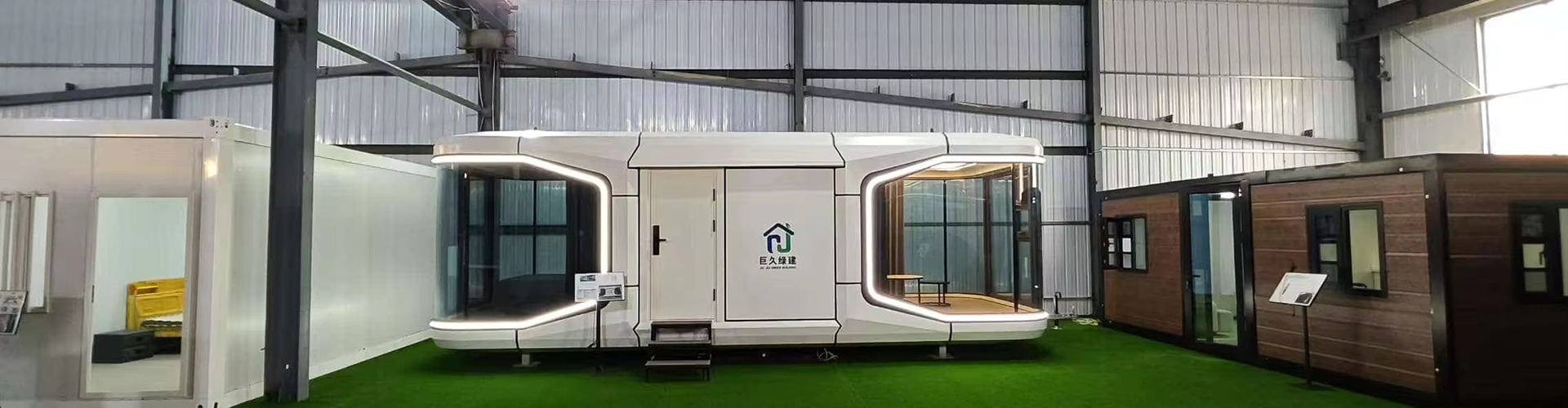
We track usage patterns across deployments. Over 68% of APPLE CABIN units go to boutique resorts—mainly for staff housing or guest villas where space is premium but permanence isn’t required. Meanwhile, 82% of SPACE CAPSULE orders come from telecom companies deploying remote base stations—where weight-to-power ratio and 48-hour setup windows are non-negotiable.
The most telling metric? Repeat order rate. Clients who used our EXPANDABLE FOLDING HOUSE for seasonal pop-up retail spaces ordered identical units—same color, same HVAC spec—for permanent satellite offices six months later. That shift from temporary to permanent signals trust in durability, not just convenience.
Choosing Your First Unit—Without Guesswork
Start with your hardest constraint—not your dream layout. Is it delivery access? Local building codes? Power source limitations? Soil type? We built a free online configurator (jujiuhouse.com) that forces those inputs upfront. Try changing “gravel pad only” to “concrete slab required”—watch how structural bracing options update instantly. See how switching from 3-phase to single-phase power drops ceiling height by 12 cm to accommodate transformer placement.
Ask for the as-built drawings—not the renderings. Request weld inspection reports for hinge assemblies. Verify whether the folding actuator uses hydraulic cylinders or electromechanical linear drives (we use the latter for precise torque control and quieter operation). Confirm if the weatherproofing test was done at 120 L/m²/hr for 30 minutes—not just a hose-down.
Fold out houses for sale succeed when they respect physics, prioritize field feedback over theoretical elegance, and treat customers as partners—not endpoints in a sales funnel. That’s why every unit ships with a QR-coded maintenance log, factory calibration data, and direct line to our field support engineers—not just a PDF manual.
The future isn’t bigger homes. It’s smarter spatial adaptation. And it’s already unfolding—one precisely engineered hinge at a time.