-
Imeli
Austin120521@outlook.com -
Imeli
sales@jujiuhouse.com -
Telefoni
+86-17864099991 -
Telefoni
+86-17854044442
- English
- Chinese
- French
- German
- Portuguese
- Spanish
- Russian
- Japanese
- Korean
- Arabic
- Irish
- Greek
- Turkish
- Italian
- Danish
- Romanian
- Indonesian
- Czech
- Afrikaans
- Swedish
- Polish
- Basque
- Catalan
- Esperanto
- Hindi
- Lao
- Albanian
- Amharic
- Armenian
- Azerbaijani
- Belarusian
- Bengali
- Bosnian
- Bulgarian
- Cebuano
- Chichewa
- Corsican
- Croatian
- Dutch
- Estonian
- Filipino
- Finnish
- Frisian
- Galician
- Georgian
- Gujarati
- Haitian
- Hausa
- Hawaiian
- Hebrew
- Hmong
- Hungarian
- Icelandic
- Igbo
- Javanese
- Kannada
- Kazakh
- Khmer
- Kurdish
- Kyrgyz
- Latin
- Latvian
- Lithuanian
- Luxembou..
- Macedonian
- Malagasy
- Malay
- Malayalam
- Maltese
- Maori
- Marathi
- Mongolian
- Burmese
- Nepali
- Norwegian
- Pashto
- Persian
- Punjabi
- Serbian
- Sesotho
- Sinhala
- Slovak
- Slovenian
- Somali
- Scots Gaelic
- Shona
- Sindhi
- Sundanese
- Swahili
- Tajik
- Tamil
- Telugu
- Thai
- Ukrainian
- Urdu
- Uzbek
- Vietnamese
- Welsh
- Xhosa
- Yiddish
- Yoruba
- Zulu
- Kinyarwanda
- Tatar
- Oriya
- Turkmen
- Uyghur




The Folding House: Innovative Space-Saving Home Solution
2026-06-22
Space is shrinking. Cities grow denser. Construction timelines tighten. Yet housing demand surges—not just for more units, but for smarter, faster, more adaptable ones. That’s where O le Fale Lalelei stops being a novelty and starts solving real-world constraints. We’ve installed over 1,200 units across 17 countries—from mountain resorts in Nepal to emergency shelters in flood-prone regions of Southeast Asia—and every deployment taught us something concrete: folding isn’t about gimmickry. It’s about precision geometry, load-path integrity, and field-tested repeatability.
What Makes a Folding House Actually Work—Not Just Fold?
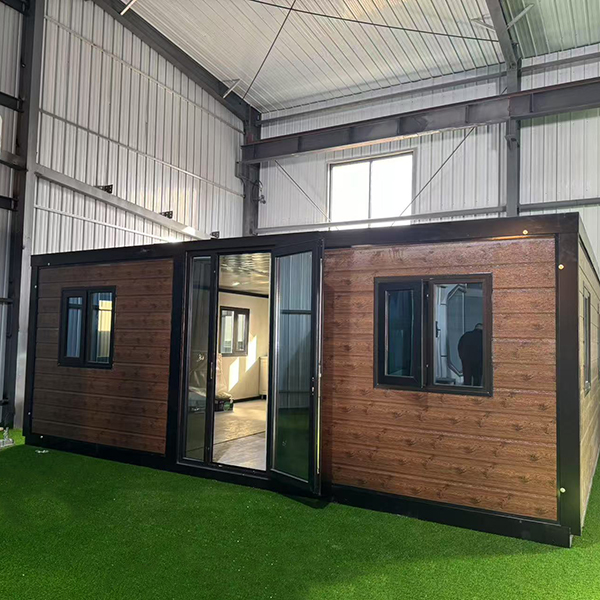
Many assume “folding” means hinges and canvas. Wrong. A true O le Fale Lalelei relies on rigid structural frames, synchronized hydraulic or mechanical actuation, and factory-calibrated tolerance stacking—±1.5 mm per panel joint, not ±5 mm. We’ve seen units fail in humid climates because sealant wasn’t rated for UV + salt exposure. Others collapsed under snow load due to unverified hinge torque specs. Real-world performance demands three non-negotiables: welded steel chassis (not bolted aluminum), dual-seal weatherproofing at fold lines, and pre-commissioned actuation cycles verified at 200% operational load. Our EXPANDABLE FOLDING HOUSE models use 3mm galvanized steel plates with CNC-bent flanges—no spot welds, no field adjustments. The result? Full expansion in under 90 minutes, no crane required, and zero dimensional drift after 50+ open-close cycles.
Why Standardized Doesn’t Mean Static
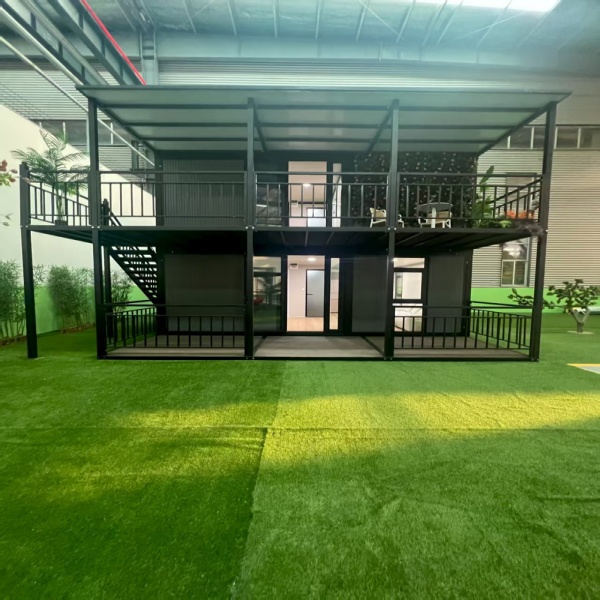
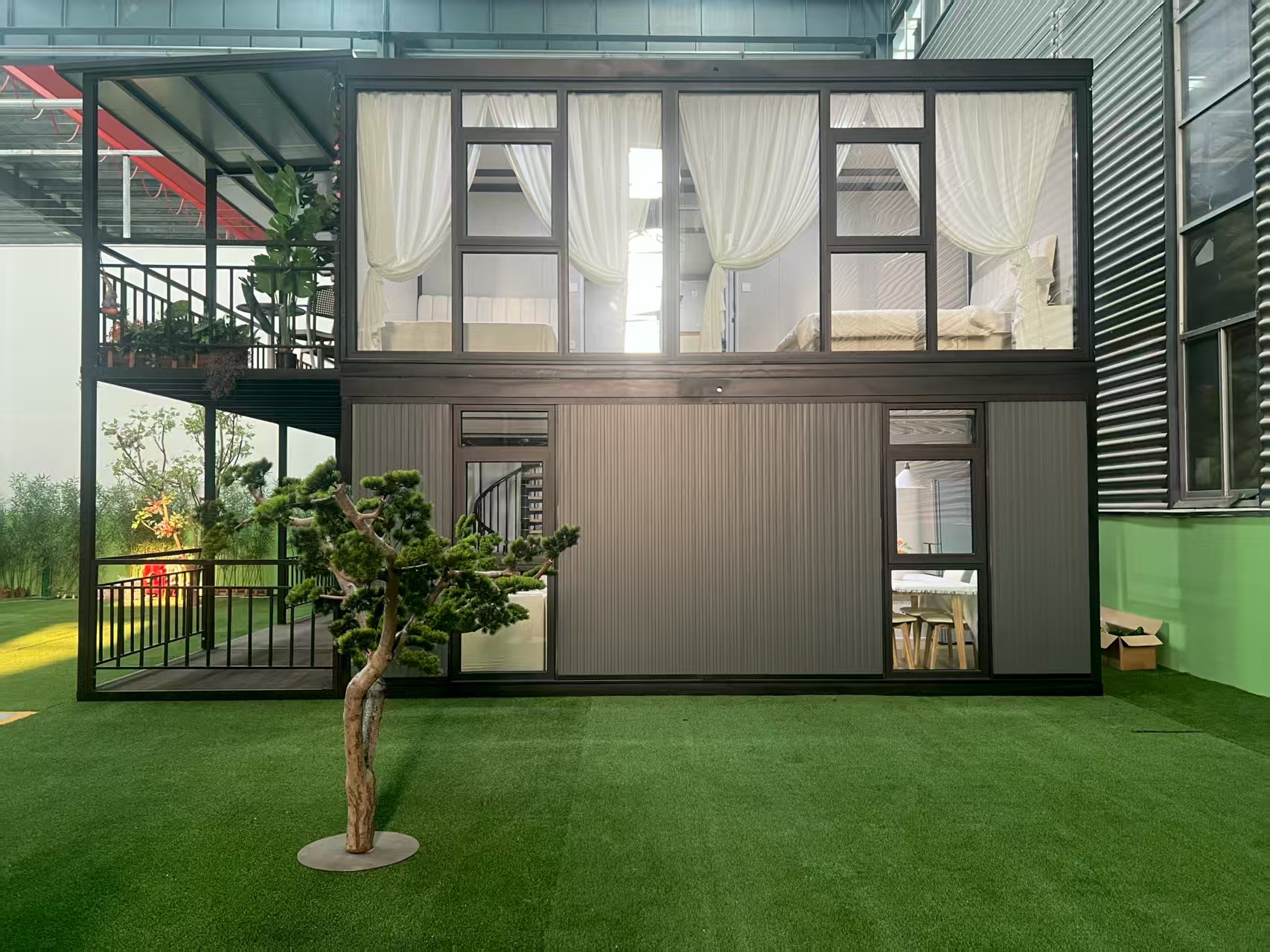
Some argue prefabrication sacrifices customization. But standardization enables reliability; flexibility enables fit. Our O le Fale Lalelei platform uses modular base dimensions—2.4m width, 6m length, 2.7m height—as anchor points. From there, clients choose roof pitch (15° to 30°), insulation grade (R-13 to R-30), and cladding (corrugated steel, fiber-cement board, or thermally broken aluminum). A villa operator in Bali needed balcony extensions. We integrated cantilevered steel arms into the primary frame—not added later. A university in Norway required -30°C thermal performance. We swapped standard PIR foam for vacuum-insulated panels (VIPs) and upgraded door gaskets to EPDM + silicone composite. No retrofitting. No guesswork. Every variant passes identical structural and weather tests before leaving the factory.
Installation Isn’t “Just Assembly”—It’s Site Intelligence
You can’t fold a house on uneven ground. Leveling matters more than aesthetics. In our first desert deployment, we lost two days leveling gravel pads—until we switched to adjustable steel footings with laser-guided tilt sensors. Now every unit ships with embedded leveling indicators and torque-spec fasteners. Crews use smartphones to scan QR codes on each panel, pulling up real-time torque charts and sequence diagrams. No manuals. No missteps. We also embed geotextile membranes beneath foundations for soft-soil sites and integrate rainwater harvesting gutters as standard—not add-ons. Clients report 40% faster commissioning versus traditional prefab because logistics, leveling, and activation are sequenced—not siloed.
From Prototype to Production: What Scale Actually Delivers
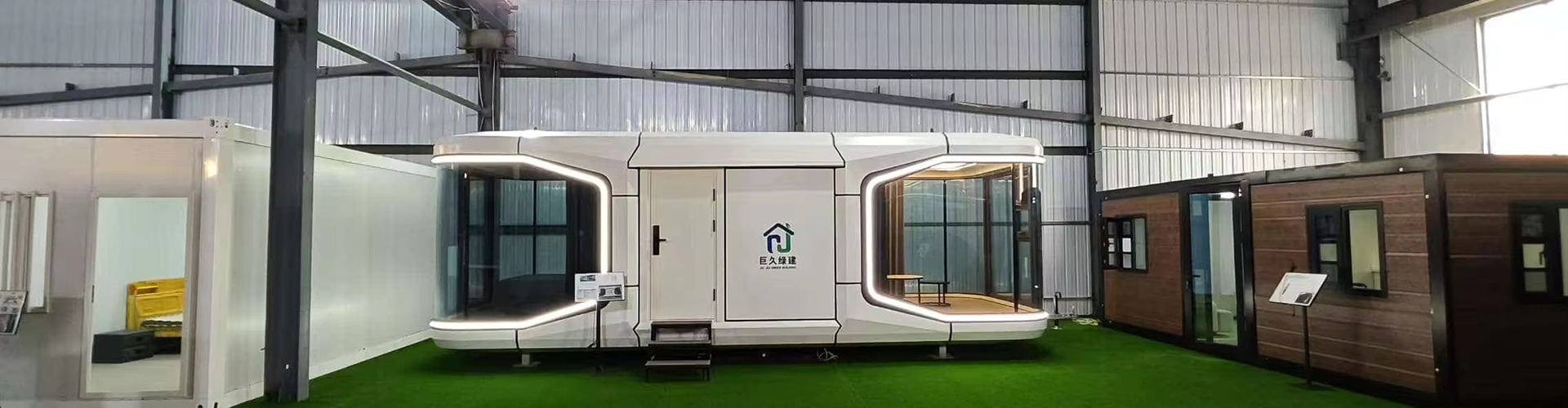
Small workshops build folding prototypes. Industrial scale builds trust. Shandong Jujiu Integrated Housing operates a 200-acre facility with five dedicated production lines—one for structural framing, one for insulation integration, one for electrical pre-wiring, one for finish cladding, and one for full-system validation. Annual output: 20,000 sets. Not “units.” Sets—meaning complete, tested, site-ready packages including foundation kits, anchoring hardware, and commissioning checklists. Each set undergoes four-stage QA: raw material tensile testing, weld penetration X-ray verification, 72-hour water spray test at 120 L/m²/h, and final dynamic fold/unfold cycle logging. This isn’t batch sampling. It’s 100% inspection. And because logistics and installation sit inside the same company—no subcontracted handoffs—lead time from order to occupancy averages 38 days internationally, not 90.
The future of housing isn’t bigger. It’s more responsive. More precise. More human-centered in its adaptability. The folding house proves that space-saving doesn’t mean space-sacrificing—it means designing for change, not against it. When your next project demands speed without compromise, density without dilution, or versatility without vulnerability, start where engineering meets experience: with a structure that folds not because it has to—but because it’s built to last, unfold, and serve longer.