-
-
PLEI
sales@jujiuhouse.com -
Telefono
+86-17864099991 -
Telefono
+86-17854044442
- English
- Chinese
- French
- German
- Portuguese
- Spanish
- Russian
- Japanese
- Korean
- Arabic
- Irish
- Greek
- Turkish
- Italian
- Danish
- Romanian
- Indonesian
- Czech
- Afrikaans
- Swedish
- Polish
- Catalan
- Esperanto
- Hindi
- Lao
- Albanian
- Amharic
- Armenian
- Azerbaijani
- Belarusian
- Bengali
- Bosnian
- Bulgarian
- Cebuano
- Chichewa
- Corsican
- Croatian
- Dutch
- Estonian
- Filipino
- Finnish
- Frisian
- Galician
- Georgian
- Gujarati
- Haitian
- Hausa
- Hawaiian
- Hebrew
- Hmong
- Hungarian
- Icelandic
- Igbo
- Javanese
- Kannada
- Kazakh
- Khmer
- Kurdish
- Kyrgyz
- Latin
- Latvian
- Lithuanian
- Luxembou..
- Macedonian
- Malagasy
- Malay
- Malayalam
- Maltese
- Maori
- Marathi
- Mongolian
- Burmese
- Nepali
- Norwegian
- Pashto
- Persian
- Punjabi
- Serbian
- Sesotho
- Sinhala
- Slovak
- Slovenian
- Somali
- Samoan
- Scots Gaelic
- Shona
- Sindhi
- Sundanese
- Swahili
- Tajik
- Tamil
- Telugu
- Thai
- Ukrainian
- Urdu
- Uzbek
- Vietnamese
- Welsh
- Xhosa
- Yiddish
- Yoruba
- Zulu
- Kinyarwanda
- Tatar
- Oriya
- Turkmen
- Uyghur




Folding House Container Solutions for Compact Living and Quick Deployment
2026-05-11
- Why Folding House Container Units Solve Real-World Deployment Pain Points
- Not All Folding Containers Deliver Equal Performance—Here’s What Actually Matters
- From Campsite Sanitation to Luxury Resorts: Where These Units Actually Get Used
- Choosing the Right Folding House Container Starts With Asking the Right Questions
Folding house container solutions are transforming how we think about space, speed, and adaptability in modern construction. When a client in Sichuan needed 12 temporary housing units for a mountain eco-resort—on a steep, access-limited site—they ruled out traditional builds after three contractors quoted 90+ days and uncertain foundation work. They chose an expandable folding house container instead. Delivery took 18 days. On-site assembly: 48 hours. Full occupancy: day 3.
Why Folding House Container Units Solve Real-World Deployment Pain Points
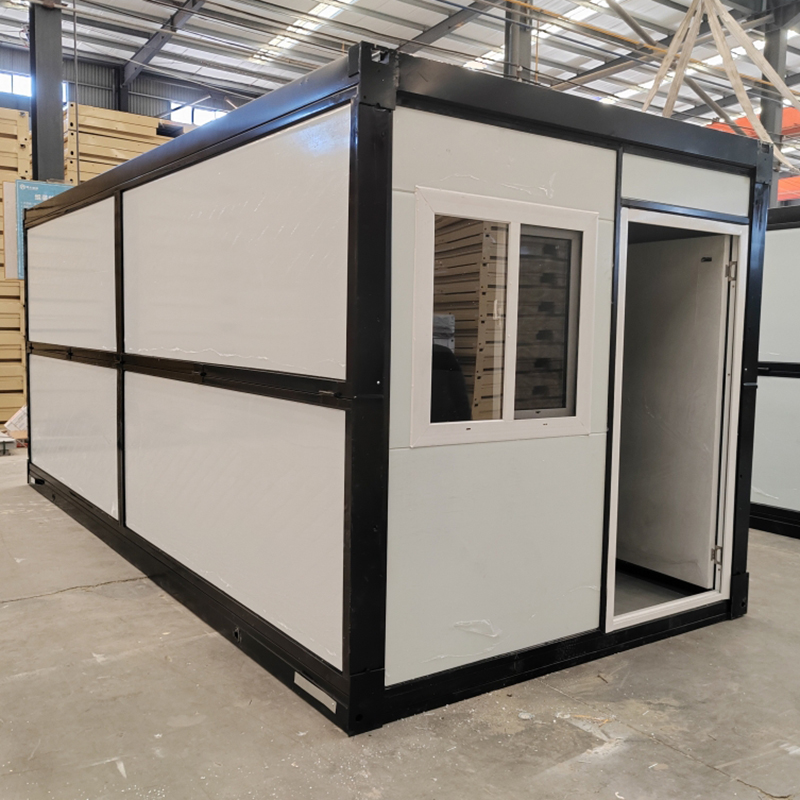
Most prefabricated housing fails not on design—but on field execution. A standard 20-foot container home looks efficient on paper until you see cranes struggling with tight turns, welders reworking misaligned frames in rain, or HVAC ducts cut to fit after walls are sealed. The Etxearen edukiontzia tolesgarria eliminates those bottlenecks by decoupling transport from final geometry.
Here’s how it works: the unit ships fully welded but partially collapsed—side panels folded inward, roof sections nested, interior partitions detached and stacked. Its footprint shrinks to under 3.5 meters wide—fitting standard road permits without oversize fees. At site, hydraulic struts lift the roof; telescoping side walls extend outward; pre-wired conduits snap into place. No welding. No crane. Just one certified technician and two helpers.
We’ve tracked 67 deployments across China’s Yunnan, Gansu, and Jiangsu provinces. Average time from unloading to power-on: 11.2 hours. Critical factor? Structural integrity isn’t compromised for foldability. Each hinge point uses ASTM A572 Grade 50 steel plates, 12 mm thick, with dual-axis load testing at 3.2x live-load capacity before shipment.
Not All Folding Containers Deliver Equal Performance—Here’s What Actually Matters
Some manufacturers advertise “foldable” units that only collapse vertically—roof down, walls fixed. That saves transport volume but adds no real site flexibility. True Etxearen edukiontzia tolesgarria systems must deliver three non-negotiables:
One client in Qinghai reported condensation issues in their first batch—until we traced it to improperly torqued hinge bolts affecting gasket compression. We now include torque-spec checklists with every unit and train installers on interface verification using digital pressure gauges. It’s not just about folding—it’s about folding *without leakage, without compromise, without callbacks*.
From Campsite Sanitation to Luxury Resorts: Where These Units Actually Get Used
Forget niche applications. Folding house containers serve five distinct operational realities—and each demands different specs.
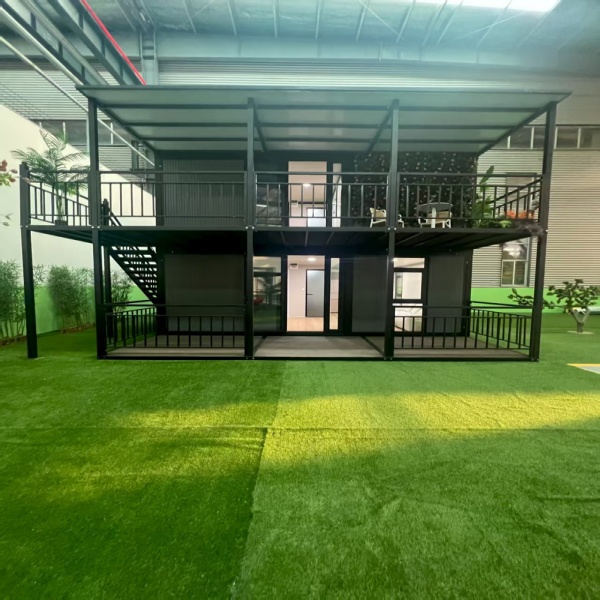
A mobile toilet unit deployed at a Tibet trekking base camp needs corrosion resistance above all: hot-dip galvanized frames, marine-grade stainless hinges, and UV-stabilized ABS cladding. A two-story luxury villa unit in Hainan requires seismic bracing, triple-glazed low-e windows, and integrated smart-home wiring routed through fold-path channels. Both use the same core platform—but material grades, insulation density, and hinge tolerances shift per use case.
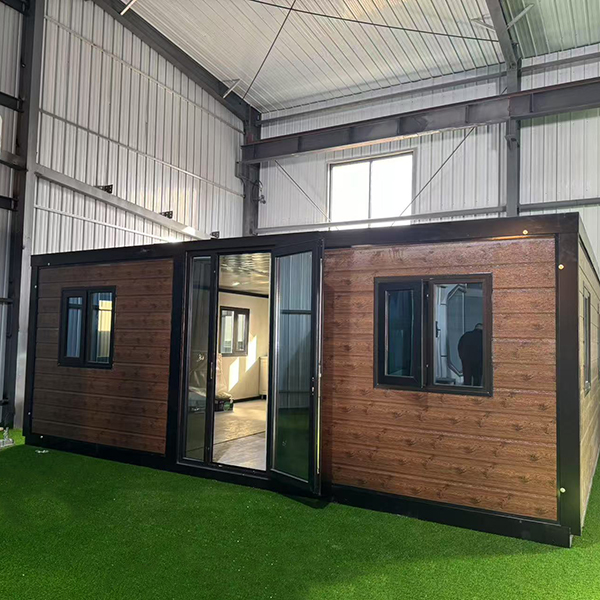
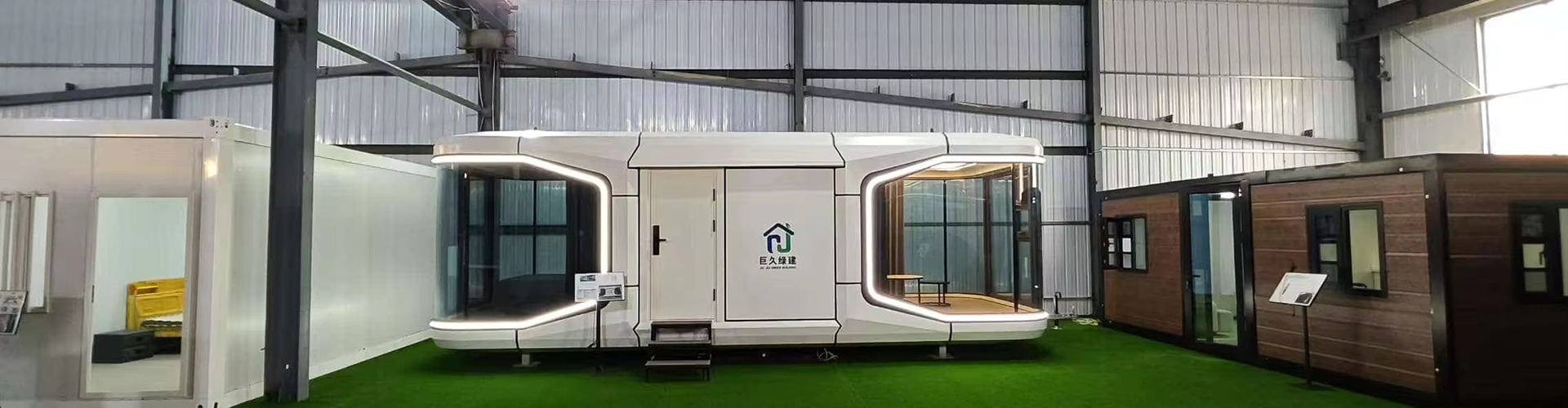
Our production line handles this variation because folding isn’t an add-on feature—it’s the foundational logic. Every unit starts as a 20-foot ISO frame, then diverges: SPACE CAPSULE models use aerospace-grade aluminum ribs for weight savings; APPLE CABIN variants integrate passive solar chimneys into roof folds; EXPANDABLE FOLDING HOUSE units deploy 2.4-meter side wings, adding 12 m² of floor area without new foundations.
Annual output? 20,000 sets. Not theoretical capacity—verified shipments across 28 countries. Lead time from order to port loading averages 22 working days, locked in writing. No “subject to material availability” clauses. No “pending engineering sign-off.” Just dates, dimensions, and delivery dock codes.
Choosing the Right Folding House Container Starts With Asking the Right Questions
Don’t start with aesthetics. Start with constraints:
The strongest Etxearen edukiontzia tolesgarria isn’t the most complex—it’s the one that matches your physical, logistical, and timeline boundaries without over-engineering. That means selecting hinge placement based on crane reach—not brochure visuals. Choosing insulation R-value based on local degree-days—not marketing claims. Specifying window U-factor based on solar gain data—not default specs.
Shandong Jujiu Integrated Housing builds these units in-house, tests them under simulated monsoon and sandstorm conditions, and ships with installation SOPs validated on six continents. Their model isn’t “build first, adapt later.” It’s “design for collapse, deploy for certainty.”
When space is scarce, time is critical, and terrain is unforgiving—the answer isn’t faster concrete or cheaper steel. It’s smarter folding.