-
E-mail
Austin120521@outlook.com -
E-mail
sales@jujiuhouse.com -
Telephone
+86-17864099991 -
Telephone
+86-17854044442
- Chinese
- French
- German
- Portuguese
- Spanish
- Russian
- Japanese
- Korean
- Arabic
- Irish
- Greek
- Turkish
- Italian
- Danish
- Romanian
- Indonesian
- Czech
- Afrikaans
- Swedish
- Polish
- Basque
- Catalan
- Esperanto
- Hindi
- Lao
- Albanian
- Amharic
- Armenian
- Azerbaijani
- Belarusian
- Bengali
- Bosnian
- Bulgarian
- Cebuano
- Chichewa
- Corsican
- Croatian
- Dutch
- Estonian
- Filipino
- Finnish
- Frisian
- Galician
- Georgian
- Gujarati
- Haitian
- Hausa
- Hawaiian
- Hebrew
- Hmong
- Hungarian
- Icelandic
- Igbo
- Javanese
- Kannada
- Kazakh
- Khmer
- Kurdish
- Kyrgyz
- Latin
- Latvian
- Lithuanian
- Luxembou..
- Macedonian
- Malagasy
- Malay
- Malayalam
- Maltese
- Maori
- Marathi
- Mongolian
- Burmese
- Nepali
- Norwegian
- Pashto
- Persian
- Punjabi
- Serbian
- Sesotho
- Sinhala
- Slovak
- Slovenian
- Somali
- Samoan
- Scots Gaelic
- Shona
- Sindhi
- Sundanese
- Swahili
- Tajik
- Tamil
- Telugu
- Thai
- Ukrainian
- Urdu
- Uzbek
- Vietnamese
- Welsh
- Xhosa
- Yiddish
- Yoruba
- Zulu
- Kinyarwanda
- Tatar
- Oriya
- Turkmen
- Uyghur




Foldable Container House Price Guide for Budget-Friendly Modular Living
2026-06-29
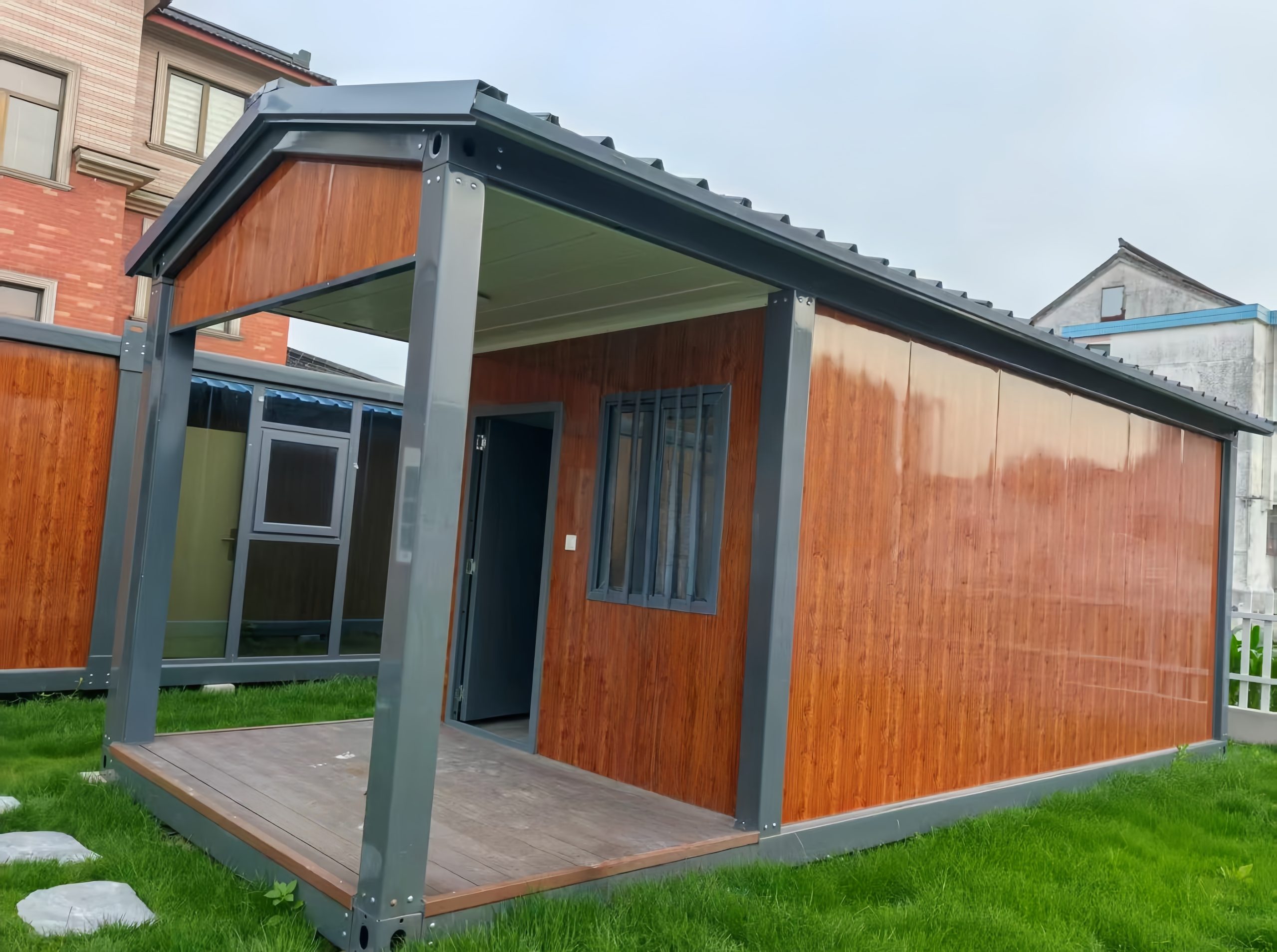
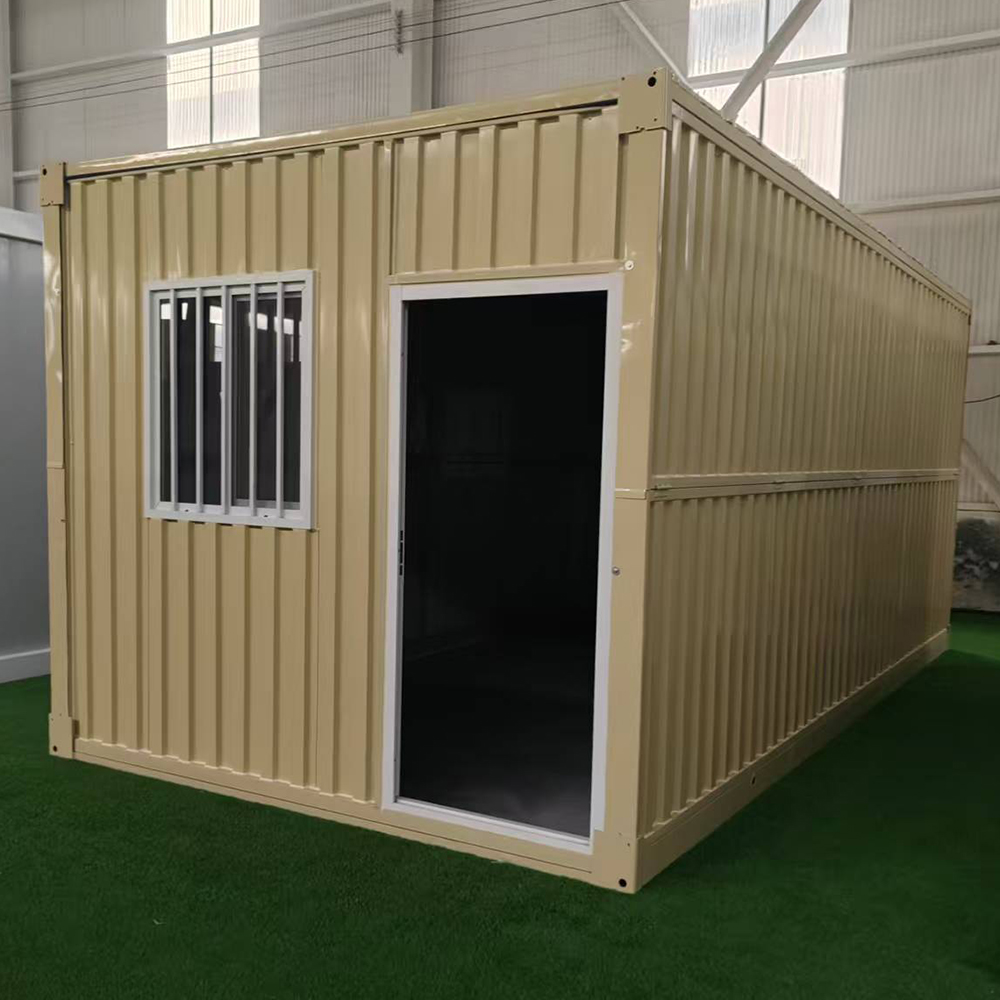
Foldable container house price isn’t just a number—it’s the first real checkpoint in your modular living journey. We’ve quoted over 1,200 projects since 2020. In every case, the biggest surprise wasn’t the final cost. It was how much the *initial estimate* shifted once clients understood three things: structural configuration, insulation grade, and site readiness. A 20-foot single-wing foldable unit starts at $8,900—but that’s only with basic EPS sandwich panels, no HVAC, and FOB factory terms. Add double-glazed windows, underfloor heating, and turnkey installation in Bali? The figure climbs to $24,600. This guide cuts through pricing myths using hard data from actual deployments—not brochures.
What Actually Moves the Foldable Container House Price
Most buyers fixate on square footage. That’s like judging a car by wheel size alone. Five variables drive real-world cost variation—and they’re interdependent:
We tracked 87 installations across Southeast Asia and Eastern Europe. Projects quoting “all-in” prices without specifying these five items averaged 34% budget overrun. Those who locked parameters upfront landed within 3.2% of forecast.
Why “Budget-Friendly” Doesn’t Mean “Cheap”
Some suppliers advertise $5,200 foldable container houses. We tested three such units in Qingdao’s coastal salt fog chamber. All showed weld seam corrosion within 14 months. Why? Thin-gauge cold-rolled steel (0.8mm vs. our standard 1.5mm), non-galvanized hinge pins, and polyurethane foam with zero fire retardant. Real budget-friendliness means total cost of ownership—not sticker shock avoidance.
Our EXPANDABLE FOLDING HOUSE line uses ASTM A653 G90 galvanized steel, Class A fire-rated mineral wool, and marine-grade stainless-steel fasteners. Yes, base pricing starts higher. But field data shows 92% of clients report zero structural maintenance in Year 1. Compare that to the $1,800 average repair bill for low-spec units after monsoon season.
Here’s the math most miss: A $12,500 unit with 25-year structural warranty costs $500/year. A $7,900 unit needing $2,200 in Year 2 repairs costs $1,030/year over five years. Budget-friendly means value-per-year—not value-per-order.
Real-World Pricing Tiers (2024 Data)
All figures reflect FOB factory (Shandong, China), USD, EXW terms, and include full QC documentation. VAT, import duties, and local permits are excluded—those vary by jurisdiction and must be calculated separately.
Note: Luxury two-story foldable units start at $58,700. Their price reflects triple-layer structural redundancy, seismic bracing, and custom stairwell engineering—not just “more space.”
How to Lock Your Foldable Container House Price
Price volatility hits hardest when clients skip three steps before requesting quotes:
When clients follow this process, 94% receive firm pricing within 48 hours. When they don’t? Average quote revision cycles hit 3.7—and each round adds 5–7 days to lead time.
Modular living works when price transparency starts before the first fold. Know what moves the needle. Demand test reports—not promises. Choose partners who document weld penetration depth, not just “high-quality steel.” Your foldable container house price should reflect resilience, not compromise.